
Every cell in your body runs on a spark plug called CoQ10. Ubiquinol is that spark plug in its active, ready-to-fire form, and it sits right at the heart of how your mitochondria turn food into energy.
If you train for endurance, you depend on your mitochondria to produce energy with oxygen, hour after hour. If you care about healthy ageing, you depend on the same mitochondria to keep your heart, brain and muscles running. In both cases, one molecule keeps showing up in the research: coenzyme Q10 (CoQ10), and especially its active form, ubiquinol.
In this guide we explain what ubiquinol is, how it differs from regular CoQ10, how it works inside your cells, the key sport and health benefits being studied, how much to take, and what the science honestly says so far.
- CoQ10 exists in two forms: ubiquinone (oxidised) and ubiquinol (reduced, active). Your body constantly switches between them.
- Ubiquinol carries electrons inside the mitochondria to help make ATP, and it is the only fat-soluble antioxidant your body makes itself.
- CoQ10 levels fall with age, and intense training and some medications (such as statins) put extra demand on them.
- Studies generally find ubiquinol raises blood CoQ10 levels more efficiently, especially in people over 40.
- Research in athletes and in heart and healthy-ageing contexts is encouraging, but still developing, so dose, quality and realistic expectations matter.
What is CoQ10?
Coenzyme Q10 is a vitamin-like, fat-soluble compound found in the membranes of almost every cell in the body. The name tells you a lot: “Q” comes from quinone, its chemical family, and “10” refers to the ten building blocks that form its long tail. That tail anchors CoQ10 inside cell membranes, exactly where energy is made.
Your body produces most of its own CoQ10, using the same pathway that makes cholesterol (the mevalonate pathway). Smaller amounts come from food. The highest concentrations are found in organs that never stop working: the heart, kidneys, liver and skeletal muscle.
CoQ10 has two big jobs:
- Energy: it shuttles electrons in the mitochondrial energy chain that produces ATP, the energy currency of every cell.
- Protection: in its ubiquinol form, it protects cell membranes and blood fats from oxidative damage.
Ubiquinol vs CoQ10: what is the difference?
This is the question most people search for, and the answer is simple once you see it: ubiquinol is CoQ10. It is one of the two forms the molecule takes.
- Ubiquinone is the oxidised form. It is what most “regular CoQ10” supplements contain. Think of it as an empty battery.
- Ubiquinol is the reduced form. It has picked up two electrons and is ready to deliver them. Think of it as a charged battery.
Inside your body the two forms are constantly converting into each other, thousands of times a second. In the blood of healthy people, most circulating CoQ10 is in the ubiquinol form. When you take ubiquinone, your body has to convert it first. When you take ubiquinol, it is already in the active form.
| Ubiquinol | Ubiquinone (“regular CoQ10”) | |
|---|---|---|
| Chemical state | Reduced, electron-loaded | Oxidised, electron-empty |
| Role | Active antioxidant and electron donor | Electron acceptor, needs converting |
| In healthy blood | The main form in circulation | A minor share |
| Absorption | Studies generally show higher blood levels at the same dose | Well studied, but conversion is needed |
| Best suited to | Over-40s, hard-training athletes, people with low CoQ10 status | Younger people with efficient conversion |
| Stability | Sensitive to oxygen, needs a stabilised form | More stable on the shelf |
The short version: both forms are CoQ10, and both are useful. Ubiquinol simply skips a step, which matters most when your body is less efficient at that step, as it tends to be after 40 or under heavy training load.
How does ubiquinol work in the body?
1. It powers the mitochondrial energy chain
Inside each mitochondrion sits the electron transport chain, a series of protein complexes embedded in the inner membrane. Electrons from the carbohydrates and fats you burn are passed along this chain, and the energy released is used to make ATP.
CoQ10 is the mobile carrier in the middle of that chain. It collects electrons from Complex I (which receives them from NADH) and Complex II (which receives them from the Krebs cycle), becomes ubiquinol, and then delivers those electrons to Complex III. Without this shuttle, the chain stops and ATP production collapses.
2. It is a gateway for fat burning
When your muscles burn fat, the electrons released during fatty-acid oxidation enter the energy chain through CoQ10 as well. For endurance athletes, who rely heavily on fat at aerobic intensities, CoQ10 sits on the road from fat stores to usable energy.
3. It protects your cells from oxidative stress
Ubiquinol is the only fat-soluble antioxidant your body makes itself. It sits inside cell and mitochondrial membranes and inside LDL particles in the blood, neutralising free radicals before they damage lipids. It also helps regenerate vitamin E, so the two antioxidants work as a team.
This matters because the energy chain itself generates free radicals as a by-product, and that output rises when you train hard.
Why do CoQ10 levels drop?
- Age. Tissue CoQ10 levels peak in early adulthood and then decline. In studies of human tissue, heart CoQ10 levels in older adults were roughly half those of young adults. The ability to keep CoQ10 in its reduced ubiquinol state also appears to decline with age.
- Intense training. Heavy training blocks increase energy turnover and oxidative stress, which raises the demand on the CoQ10 pool. Some studies in athletes report lower blood CoQ10 during periods of very high load.
- Statin medication. Statins lower cholesterol by blocking an enzyme early in the mevalonate pathway, the same pathway that makes CoQ10. As a result, statins also lower blood CoQ10 levels.
- Diet. A typical diet provides only a few milligrams of CoQ10 a day, far below the doses used in research.
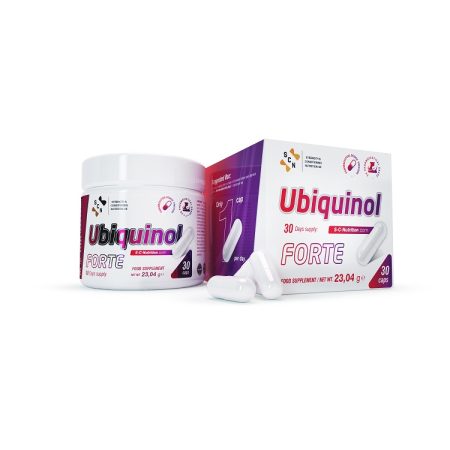
Ubiquinol Forte
One capsule a day delivers 250 mg of Kaneka QH™ ubiquinol, the active form of CoQ10, together with Cursol® curcumin (250 mg), grape seed extract with 95% proanthocyanidins (100 mg) and BioPerine® (30 mg) to support absorption. Made for athletes and for everyone over 40 who wants CoQ10 that is ready to use.
What are the benefits of ubiquinol for athletes?
At S-C Nutrition, endurance sport is our home ground. Here are the eight reasons ubiquinol and CoQ10 are on the radar of runners, cyclists, triathletes, swimmers and marathon runners:
- Fuels aerobic ATP production. Ubiquinol carries electrons through the mitochondrial chain, the engine room of every aerobic effort you make.
- Supports peak power output. In a double-blind study of 100 young German elite athletes, six weeks of ubiquinol improved peak power output significantly more than placebo.
- Supports fat oxidation. Electrons from burning fat enter the energy chain through CoQ10, helping you use fat as fuel and spare glycogen for when the race heats up.
- Helps counter exercise-induced oxidative stress. Hard training increases free-radical production, and ubiquinol is the antioxidant that sits right where those radicals form, inside the mitochondrial membrane.
- Supports muscle recovery. In elite athletes during an intense training camp, CoQ10 supplementation was linked with lower blood markers of muscle damage compared with placebo.
- Helps reduce perceived fatigue. In a small study in healthy volunteers, CoQ10 reduced subjective fatigue and improved performance on a fatiguing cycling test.
- Supports your heart, the endurance engine. The heart has one of the highest CoQ10 concentrations in the body, because it never stops working.
- Supports blood vessel function. Meta-analyses suggest CoQ10 can improve endothelial function, the ability of blood vessels to widen and deliver oxygen to working muscles.
Training hard? Give your mitochondria the active form of CoQ10.
Ubiquinol for runners, cyclists, triathletes, swimmers and marathon runners
Every endurance sport asks something different of your mitochondria. Here is where ubiquinol fits for each of them.
🏃 Runners
From 5K to half marathon, you live close to your aerobic ceiling. Ubiquinol supports the mitochondrial ATP production and the oxidative-stress defence you need for repeated hard intervals and tempo work.
🚴 Cyclists
Long hours in the saddle plus repeated surges on climbs and in sprints. Ubiquinol research in elite athletes centred on peak power, the number that decides breakaways and finishes.
🏊♂️🚴🏃 Triathletes
Three disciplines mean high weekly volume and stacked sessions. Supporting mitochondrial energy, fat oxidation and recovery between sessions is where ubiquinol earns its place.
🏊 Swimmers
Swimming loads both upper and lower body and mixes aerobic base work with anaerobic sets. CoQ10 supports energy production across all working muscle and helps manage the oxidative load of double sessions.
🏅 Marathon runners
The marathon is the ultimate fat-burning, glycogen-sparing test. After 30 km, how well you burn fat and how well your cells cope with accumulated oxidative stress decide whether you hit the wall. Ubiquinol supports both: it is the gateway for fat-derived electrons and the antioxidant guarding your mitochondrial membranes. Many marathoners are also over 40, the age when the active form matters most.
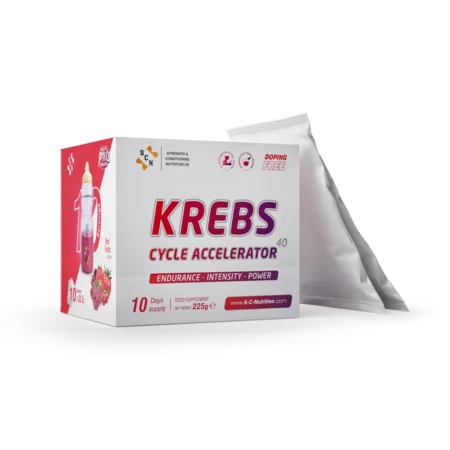
Krebs Cycle Accelerator⁴⁰
Our highest ubiquinol dose: 400 mg of Kaneka™ ubiquinol in every serving, inside a 40-ingredient pre-training formula built around the Krebs cycle and mitochondrial energy, with creatine, calcium pyruvate, D-ribose, citrulline, R-ALA and B vitamins. Take one sachet 30–40 minutes before your warm-up.
What are the health benefits of ubiquinol and CoQ10?
You don’t need to be an athlete to care about mitochondria. These are the areas where CoQ10 and ubiquinol are being researched for health, wellbeing and healthy ageing:
- Everyday energy. The same mitochondrial process that powers a marathon powers your working day. Ubiquinol is central to it.
- Heart health. CoQ10 is concentrated in heart muscle. In the long-term Q-SYMBIO trial, people with heart failure taking CoQ10 alongside their usual treatment had fewer major cardiovascular events than those on placebo.
- Healthy blood vessels. Research suggests CoQ10 can support endothelial function and healthy blood flow.
- Antioxidant protection. As the body’s own fat-soluble antioxidant, ubiquinol helps protect cell membranes and blood lipids from oxidation.
- Healthy ageing. Because CoQ10 levels and the ability to keep it in the ubiquinol form decline with age, the active form is especially relevant for adults over 40.
- Brain energy. The brain is one of the most energy-hungry organs. CoQ10 has been studied in migraine prevention, where one controlled trial found fewer attacks with 300 mg a day.
- Support for statin users. Statins lower blood CoQ10 levels. Whether supplementing relieves statin-related muscle symptoms is still debated, but many people on statins choose to discuss it with their doctor.
- Skin from within. A controlled study found that oral CoQ10 improved some signs of skin ageing, such as wrinkle depth and skin smoothness.
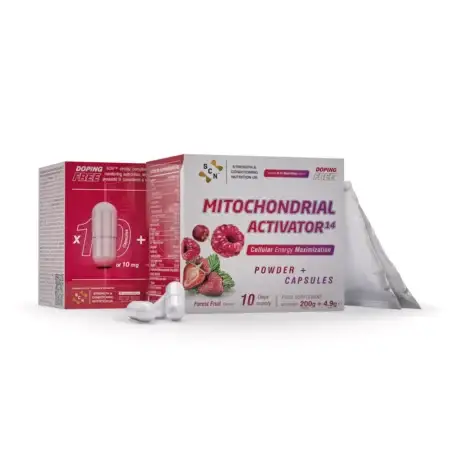
Mitochondrial Activator¹⁴
One formula, two missions. Mitochondrial Activator¹⁴ combines ubiquinol with targeted mitochondrial nutrients to support mitochondrial biogenesis and density, for higher sustained output in sport and for energy, focus and healthy cellular ageing in everyday life.
What does the research say about ubiquinol?
We believe you deserve honesty, not hype. Here is where the evidence stands.
- The biology is rock solid. CoQ10’s role in the electron transport chain and as a membrane antioxidant is textbook science.
- In athletes, the signal is promising. The strongest human trial, a double-blind, placebo-controlled study in 100 trained German athletes, found that 300 mg of ubiquinol a day for six weeks improved peak power more than placebo. Other studies show lower markers of muscle damage and fatigue. Results across studies are mixed, and more research in endurance athletes is needed.
- In heart health, the evidence is strongest, but it comes from people with diagnosed conditions under medical care, not from healthy people.
- On ubiquinol vs ubiquinone, studies comparing equal doses generally report higher blood CoQ10 levels with ubiquinol, particularly in older adults. The size of that advantage varies between studies.
Ubiquinol or CoQ10: which should I take?
If you are under 30, healthy and on a budget, conventional CoQ10 (ubiquinone) is a reasonable choice. If you are over 40, training hard, taking a statin, or want the most direct route to raising your blood CoQ10, ubiquinol is the smarter pick, because it is already in the active form your cells use.
Quality matters too. Ubiquinol oxidises easily, so it needs a stabilised raw material. That is why every SCN ubiquinol product uses Kaneka QH™, the original and most researched ubiquinol, made in Japan by the company that first made ubiquinol available as a supplement.
How much ubiquinol should you take per day?
- Research doses typically range from 100 to 300 mg a day, with some studies going higher.
- Take it with food that contains fat. CoQ10 is fat-soluble, so a meal with some fat improves absorption. BioPerine® (black pepper extract) is also used to support absorption.
- Be consistent. Tissue levels build over weeks. Most studies run for at least four to six weeks.
- Timing for training: for daily support, take it with breakfast or lunch. For a pre-session formula such as Krebs Cycle Accelerator⁴⁰, follow the pre-training timing on the label.
- Follow the label of your product and don’t exceed the stated daily dose.
Can you get enough CoQ10 from food?
CoQ10 is found in organ meats such as heart and liver, oily fish like sardines and mackerel, beef, chicken, nuts and some vegetable oils. However, a typical diet provides only a few milligrams a day. Reaching the 100 to 300 mg used in studies through food alone is not realistic, which is why people interested in CoQ10 benefits turn to supplements.
Is ubiquinol safe?
CoQ10 and ubiquinol have been well tolerated in clinical trials, including at doses well above those in most supplements. Occasional side effects are mild, such as stomach upset. A few points to keep in mind:
- Blood thinners: CoQ10 may reduce the effect of warfarin. Speak to your doctor first.
- Blood pressure and diabetes medication: CoQ10 may add to their effects, so check with your doctor.
- Pregnancy, breastfeeding, or under medical treatment: consult a healthcare professional before use.
Every SCN product is produced under our 100% doping-free and cross-contamination-safe commitment, so tested athletes can use it with confidence.
Ready to support your mitochondria? Choose the ubiquinol formula that matches your goal.
Which SCN ubiquinol product is right for you?
| Ubiquinol Forte | Krebs Cycle Accelerator⁴⁰ | Mitochondrial Activator¹⁴ | |
|---|---|---|---|
| Ubiquinol | 250 mg Kaneka QH™ per capsule | 400 mg Kaneka™ per sachet | Included with mitochondrial actives |
| Format | 1 capsule a day | 1 sachet in water, pre-training | Daily mitochondria formula |
| Best for | Daily CoQ10 support for athletes and over-40s | Maximum session performance for endurance and power athletes | Mitochondrial biogenesis and density, sport or healthy ageing |
| Teammates | Curcumin, grape seed, BioPerine® | Creatine, pyruvate, citrulline, D-ribose, B vitamins and more | Targeted mitochondrial nutrients |
| Shop | View product | View product | View product |
Working with NADH too? NADH feeds electrons into Complex I, and ubiquinol carries them onward, so the two support the energy chain at back-to-back steps. See our NADH for cellular energy.
Frequently asked questions about ubiquinol and CoQ10
What is the difference between ubiquinol and CoQ10?
Ubiquinol is a form of CoQ10. CoQ10 exists as ubiquinone (oxidised) and ubiquinol (reduced). Ubiquinol is the active, electron-loaded form that works as an antioxidant and is the main form in healthy blood.
Is ubiquinol better than CoQ10?
Both are useful. Ubiquinol is already in the active form, and studies generally show it raises blood CoQ10 levels more efficiently, particularly in people over 40. For younger, healthy people, regular CoQ10 can also work well.
Does ubiquinol help athletic performance?
A double-blind trial in trained athletes found ubiquinol improved peak power more than placebo, and other studies show lower fatigue and muscle-damage markers. The research is promising but still developing, so ubiquinol works best as part of a solid training and nutrition plan.
How much ubiquinol should I take per day?
Research typically uses 100 to 300 mg a day. Always follow the directions on your product label: Ubiquinol Forte provides 250 mg in one daily capsule.
When is the best time to take ubiquinol?
Take it with a meal that contains some fat, since CoQ10 is fat-soluble. Many people take it with breakfast or lunch. Pre-training formulas are taken before your session, as stated on the label.
Is ubiquinol a stimulant?
No. Ubiquinol is a natural part of your cells’ energy machinery, not a stimulant like caffeine. It supports energy at the mitochondrial level.
Should I take CoQ10 if I take statins?
Statins lower blood CoQ10 levels because they block the same pathway that makes it. Whether supplementing helps statin-related muscle symptoms is still debated, so talk to your doctor before starting.
Is ubiquinol allowed in competition?
Yes. CoQ10 and ubiquinol are not on the WADA prohibited list. SCN products are also produced under our 100% doping-free and cross-contamination-safe policy.
Power your cells with the active form of CoQ10
Whether you are chasing a personal best, training for your next marathon, or simply want more energy as the years go by, your mitochondria are where it starts, and ubiquinol is one of their most important tools. Choose your formula:
Selected research
- Alf D, Schmidt ME, Siebrecht SC. Ubiquinol supplementation enhances peak power production in trained athletes: a double-blind, placebo controlled study. J Int Soc Sports Nutr. 2013;10:24.
- Mortensen SA, et al. The effect of coenzyme Q10 on morbidity and mortality in chronic heart failure: results from Q-SYMBIO. JACC Heart Fail. 2014;2(6):641–649.
- Kon M, et al. Reduction in exercise-induced muscle damage by oral coenzyme Q10 supplementation in elite kendo athletes. Br J Nutr. 2008.
- Mizuno K, et al. Antifatigue effects of coenzyme Q10 during physical fatigue. Nutrition. 2008;24(4):293–299.
- Kalén A, Appelkvist EL, Dallner G. Age-related changes in the lipid compositions of rat and human tissues. Lipids. 1989;24(7):579–584.
- Gao L, et al. Effects of coenzyme Q10 on vascular endothelial function in humans: a meta-analysis of randomized controlled trials. Atherosclerosis. 2012;221(2):311–316.
- Sándor PS, et al. Efficacy of coenzyme Q10 in migraine prophylaxis: a randomized controlled trial. Neurology. 2005;64(4):713–715.
- Žmitek K, et al. The effect of dietary intake of coenzyme Q10 on skin parameters and condition. BioFactors. 2017;43(1):132–140.
This article is for education and general information only. It is not medical advice and does not replace advice from your doctor. Food supplements should not be used as a substitute for a varied, balanced diet and a healthy lifestyle. Do not exceed the recommended daily dose. If you are pregnant, breastfeeding, taking medication or managing a health condition, consult a healthcare professional before use.