
SCN™ Ingredients Guide
Ecdysterone Benefits: The Plant Anabolic for Endurance, Strength, Muscle and Hormonal Health – and Why the Extract Decides Everything
Ecdysterone is the only natural compound to make German anti-doping researchers recommend a WADA review after a controlled human trial. Yet most ecdysterone supplements deliver a fraction of what their label claims. This guide explains how ecdysterone works, what the research shows for endurance, strength, muscle mass and hormones, why Rhaponticum carthamoides extract outperforms spinach and Cyanotis, and how pharmaceutical HPLC standardisation separates a real dose from a marketing dose.
Quick answer: what are the benefits of ecdysterone?
Ecdysterone (20-hydroxyecdysone) is a phytoecdysteroid – a plant steroid that increases protein synthesis in muscle cells without touching the androgen receptor or your own hormone production. In a 10-week placebo-controlled trial, trained men taking ecdysterone gained significantly more muscle mass and bench-press strength than placebo, with no change in liver or kidney markers or steroid profile. Decades of earlier research link it to greater physical work capacity, faster recovery and metabolic, bone and stress-resilience benefits. It is not prohibited by WADA. The catch: its effect depends on the extract – a 20:1 Rhaponticum carthamoides root extract standardised to 90–95% ecdysteroids by HPLC is a different product from spinach powder or an unverified “ecdysterone” capsule.
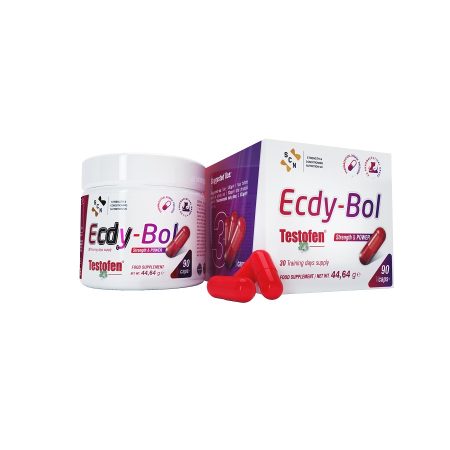
SCN™ Ecdy-Bol – 135 mg of ecdysterones per day from 20:1 Rhaponticum carthamoides 90% extract, plus Testofen® and zinc. 90 Vcaps®.
In this guide
- What is ecdysterone?
- How does ecdysterone work?
- Is ecdysterone a steroid or a hormone?
- Rhaponticum vs spinach vs Cyanotis vs turkesterone
- Why extract ratio and standardisation decide the result
- Pharmaceutical HPLC quality vs the rest of the market
- Does ecdysterone improve endurance?
- Does ecdysterone increase strength?
- Does ecdysterone build muscle mass?
- 8 sport benefits of ecdysterone
- Ecdysterone and your hormones
- 8 health benefits of ecdysterone
- Runners, cyclists, triathletes, swimmers, marathoners
- How much ecdysterone should you take?
- Is ecdysterone safe? Is it WADA-legal?
- SCN™ products that contain ecdysterone
- FAQ
- Αναφορές
What is ecdysterone?
Ecdysterone – also written 20-hydroxyecdysone, 20E, β-ecdysone or 20-hydroxyecdysterone – is the best-studied member of the phytoecdysteroids, a family of more than 500 steroid-like molecules that plants produce to defend themselves against insects. In insects the same molecule is the moulting hormone; in plants it is a chemical weapon; in mammals it is neither a hormone nor a toxin, but a signalling molecule with a remarkable effect on muscle protein synthesis.
Chemically, ecdysterone is a polyhydroxylated cholesterol derivative with a four-ring steroid skeleton. The hydroxyl group at carbon 20 is what correlates with anabolic activity – which is why 20-hydroxyecdysone, not plain ecdysone, is the compound athletes want. Roughly 6% of plant species contain detectable phytoecdysteroids, and a handful accumulate them in useful amounts: Rhaponticum carthamoides (maral root, leuzea), Cyanotis arachnoidea, Ajuga turkestanica, spinach and quinoa.
Ecdysterone has been part of elite sport since the 1970s, when Soviet sports-science institutes began using Rhaponticum preparations with Olympic athletes – the origin of the “Russian secret” label that Western researchers later attached to it. Since 2020 it has been on the World Anti-Doping Agency’s Monitoring Program: WADA tracks its use in sport but has not prohibited it.
How does ecdysterone work?
Ecdysterone’s primary action is to increase protein synthesis in skeletal muscle cells. In the landmark cell study by Gorelick-Feldman and colleagues at Rutgers University (2008), 20-hydroxyecdysone increased protein synthesis in human and mouse muscle cells by up to around 20% – an effect comparable to IGF-1 – and in rats seven days of ecdysterone produced a measurable increase in grip strength. The effect was blocked by a PI3K inhibitor, pointing to the PI3K/Akt pathway, the same anabolic signalling route that insulin and IGF-1 use.
Crucially, ecdysterone does not bind the androgen receptor. Work from the Freie Universität Berlin group (Parr et al. 2014, 2015) showed that its anabolic effect is mediated through estrogen receptor beta (ERβ) – a receptor expressed in muscle, bone, brain and fat that is linked to muscle growth and repair but not to the masculinising effects of androgens. In rats, ecdysterone produced muscle-fibre hypertrophy comparable to or greater than the anabolic steroid metandienone and the SARM S-1, while leaving the prostate and seminal vesicles untouched.
Beyond protein synthesis, Soviet and later research describe several supporting actions that matter to athletes:
- Energy metabolism: ecdysterone increased ATP and creatine phosphate content in skeletal muscle in animal work (Kholodova 1997).
- Reduced protein breakdown: Chermnykh and Syrov (1988) reported improved nitrogen balance and physical endurance in animals, with ecdysterone matching methandrostenolone on protein metabolism without its side effects.
- Glucose and lipid handling: ecdysterone lowered blood glucose and improved lipid profiles in multiple animal models – a plausible contributor to its body-composition effects.
- Adaptogenic action: Rhaponticum carthamoides was formally classified as an adaptogen by Brekhman and Dardymov in 1969; extracts improve resistance to physical and psychological stress in animal studies.
Is ecdysterone a steroid? Is it a hormone?
Ecdysterone is a steroid in the strict chemical sense – it has the four-ring sterane skeleton – but it is not an anabolic-androgenic steroid and it is not a human hormone. The differences are fundamental:
| Property | Anabolic-androgenic steroids | Ecdysterone |
|---|---|---|
| Receptor | Androgen receptor | Estrogen receptor β – no androgen-receptor binding |
| Effect on own testosterone | Suppresses the HPG axis | No suppression – steroid profile unchanged in the human trial |
| Androgenic side effects | Yes (prostate, hair, acne, virilisation) | None observed – prostate weight unchanged in animal studies |
| Aromatisation to estrogen | Yes, for many compounds | No – it is not a substrate for aromatase |
| Liver / kidney stress markers | Often elevated | Unchanged after 10 weeks in humans |
| Legal / anti-doping status | Prohibited (WADA S1), controlled substances | Legal; WADA Monitoring Program, not prohibited |
| Post-cycle therapy needed | Yes | No |
Rhaponticum carthamoides extract vs spinach, Cyanotis, quinoa and turkesterone – what is the difference?
“Ecdysterone” on a label tells you the molecule, not the source – and the source decides the phytosteroid profile, the purity, the contaminant risk and, ultimately, whether the product works. Here is how the five sources on the market compare.
Rhaponticum carthamoides (maral root, leuzea) – the reference source
A perennial of the Altai and Sayan mountains of southern Siberia, Rhaponticum is the plant behind every Soviet-era ecdysterone study and the reference material in modern pharmacopoeial HPLC methods. Its roots contain a complex of more than 10 ecdysteroids – the “levseins” – dominated by 20-hydroxyecdysone and accompanied by makisterone C, carthamosterone, polypodine B, ajugasterone C, 24-dehydromakisterone A, inokosterone and others. Research groups describe these as acting synergistically. Raw root contains roughly 0.05–1.7% 20-hydroxyecdysone, which is why a concentrated, standardised extract is essential: a 20:1 root extract standardised to 90–95% ecdysteroids compresses twenty kilograms of root into one kilogram of active material. Rhaponticum also brings flavonoids, lignans and phenolic acids with antioxidant and anti-inflammatory activity, and a long safety record in human use.
Verdict: the most studied, most complete and best-tolerated source. This is what SCN™ uses.
Spinach extract (Spinacia oleracea)
Spinach is a genuine but poor source. Reported 20-hydroxyecdysone content in spinach leaf ranges from 17 to 885 µg per gram – even at the top of that range you would need over a kilogram of spinach to reach 100 mg of ecdysterone. Spinach extracts are therefore either weakly concentrated, or – as the Hunyadi group showed in Scientific Reports (2016) – not spinach at all: several European “spinach ecdysterone” products were found to actually derive from Cyanotis arachnoidea, a case of product counterfeiting. Spinach-based products also lack the Rhaponticum co-ecdysteroids.
Verdict: low concentration, frequently mislabelled.
Cyanotis arachnoidea / Cyanotis vaga
A Chinese plant whose roots contain up to 4–5% 20-hydroxyecdysone – the cheapest raw material for bulk ecdysterone powder, which is why it dominates the low-cost end of the market and why it is used to counterfeit spinach products. Cyanotis has almost no traditional-use or clinical history in humans, a narrow ecdysteroid profile compared with Rhaponticum, and its supply chain is the one most associated in the analytical literature with labelling discrepancies.
Verdict: cheap, high-yield, poorly characterised. Not what SCN™ uses.
Ajuga turkestanica / turkesterone
Turkesterone is a different ecdysteroid (an extra hydroxyl at C-11), found mainly in Ajuga turkestanica from Uzbekistan. Animal and cell studies show anabolic and anti-adipogenic effects, but there is no controlled human trial of turkesterone – unlike ecdysterone. Ajuga extracts typically contain around 2% turkesterone and under 1% ecdysterone, and analytical surveys have found commercial turkesterone products with little or none of the labelled compound.
Verdict: promising, unproven in humans, widely mislabelled.
Quinoa (Chenopodium quinoa)
Quinoa seed contains 4–12 times more 20-hydroxyecdysone than spinach by dry weight and about 36 different phytoecdysteroids, making it an excellent food for athletes – but still a poor supplement source compared with Rhaponticum or Cyanotis. Eat it; do not expect it to replace a standardised extract.
Verdict: a functional food, not a supplement-grade source.
Why do extract ratio and standardisation decide the result?
Three Rhaponticum products can carry the same plant name and deliver wildly different doses. Understanding three numbers protects you:
1. Plant part
Ecdysteroids concentrate in the root and rhizome. Whole-plant, leaf or seed powder carries far less and a different profile. The anabolic research was done on root extract – not on ground plant.
2. Extract ratio
“20:1” means 20 kg of root yields 1 kg of extract. A 4:1 or 10:1 extract, or raw powder, contains proportionally less active material. At ~1% root content, only a high ratio gets you to a meaningful dose per capsule.
3. Standardisation
“Standardised to 90% ecdysteroids (HPLC)” means the extract has been purified and verified so that 90 mg of every 100 mg is ecdysteroid. Without a stated percentage and method, the number on the front of the tub is meaningless.
Worked example: a capsule of “500 mg Rhaponticum carthamoides powder” contains perhaps 5 mg of ecdysterone. A capsule of “50 mg Rhaponticum carthamoides 20:1 extract, 90% ecdysteroids” contains 45 mg. Same plant name, nine times the active dose at one tenth of the capsule weight. That is why SCN™ Ecdy-Bol states both numbers on the label: 150 mg of 90% extract per three capsules, delivering 135 mg of ecdysterones.
What does “pharmaceutical HPLC quality” mean – and why does most of the ecdysterone market fail the test?
High-Performance Liquid Chromatography (HPLC) is the analytical method pharmacopoeias use to identify and quantify ecdysterone: a sample is separated on a column, each compound is detected by its retention time and UV spectrum against a certified β-ecdysterone reference standard, and the exact milligram content is calculated. Pharmaceutical-grade extracts are tested this way batch by batch, so the number on the certificate of analysis is a measurement, not an estimate. Cheap extracts may be sold on the basis of a supplier’s declared percentage that nobody has verified – and the published evidence shows what happens when nobody checks.
What independent laboratories found when they tested ecdysterone supplements
- Label claims vs reality (Ambrosio et al., Freie Universität Berlin, 2020): when the Berlin anti-doping group analysed the ecdysterone product used in their own human trial, the capsules contained around 6 mg of ecdysterone each – a small fraction of the labelled amount. Their follow-up paper on supplement labelling reliability concluded that declared ecdysterone contents on the market often cannot be trusted.
- Botanical counterfeiting (Hunyadi et al., Scientific Reports, 2016): products sold in Europe as spinach-derived ecdysterone were shown by analysis of their ecdysteroid fingerprint to be made from Cyanotis arachnoidea instead.
- Hidden anabolic steroids (Pálinkás et al., 2023): researchers screening ecdysterone-containing supplements quantified ecdysterone and at the same time tested for WADA-prohibited anabolic androgenic steroids, hormones and metabolic modulators – because contamination or spiking of “natural anabolic” products with prohibited compounds is a documented risk category. For a drug-tested athlete, an unverified ecdysterone product is a career risk.
- Validated methods exist (Todorova et al., 2023): Bulgarian pharmaceutical chemists published a validated HPLC method specifically for identifying and quantifying ecdysterone and turkesterone in dietary supplements – proof that reliable testing is available to any manufacturer who chooses to use it.
How to read an ecdysterone label like an analyst
- Botanical name and plant part: Rhaponticum carthamoides (Willd.) Iljin, root. If the plant is unnamed, assume Cyanotis.
- Extract ratio: 20:1 is the benchmark for root extract.
- Standardisation percentage and method: “90% ecdysteroids (HPLC)” or “95% 20-hydroxyecdysone (HPLC)”. No percentage = no guarantee.
- Milligrams of extract AND milligrams of ecdysterone: both should appear. Ecdy-Bol: 150 mg extract → 135 mg ecdysterones per 3 capsules.
- Manufacturing standard: ISO 9001 / GMP certification of the facility, not just the raw material.
- Price sanity check: a genuine 100+ mg daily dose of 90% Rhaponticum extract cannot be sold for the price of spinach powder.
Every SCN™ Ecdy-Bol batch is produced in a Bureau Veritas ISO 9001-certified pharmaceutical-standard facility from Rhaponticum carthamoides 20:1 root extract standardised to 90% ecdysteroids – the full specification is printed on the label.
Stop guessing what is in your capsule.
Ecdy-Bol: 20:1 Rhaponticum carthamoides, 90% ecdysteroids, 135 mg ecdysterones per day. Label-stated. ISO 9001 produced.
Does ecdysterone improve endurance?
Endurance is where ecdysterone’s story began. Soviet sports pharmacologists adopted Rhaponticum preparations in the 1970s–80s precisely because they extended physical work capacity. Chermnykh, Shimanovsky, Shutko and Syrov (1988) compared ecdysterone directly with the anabolic steroid methandrostenolone in animals and found that ecdysterone increased physical endurance and improved protein metabolism in skeletal muscle – matching the steroid’s anabolic effect without its androgenic actions. Kholodova’s group (1997) reported higher skeletal-muscle ATP and creatine-phosphate stores after ecdysterone, the fuel reserves that decide how long you can hold power.
Two further mechanisms are relevant to the endurance athlete. First, ecdysterone’s PI3K/Akt signalling is the same pathway that drives muscle protein synthesis after training – which translates into faster repair between sessions in a high-volume week. Second, the metabolic literature shows ecdysterone improving glucose disposal and lipid metabolism in animal models and early human work (a randomised controlled study in metabolic syndrome), supporting the efficient fuel handling that endurance performance depends on. Early Russian reports also describe effects on red-blood-cell production; this remains an area of interest rather than established fact.
For endurance athletes, the practical benefit of ecdysterone is not bulk. It is the ability to maintain or build lean, functional muscle and power under heavy training loads – the muscle that protects your economy and your finishing kick – while recovering faster, without water retention and without anything on the WADA Prohibited List.
A 2021 randomised controlled trial reinforces the point from a different angle: in adults over 50 doing moderate exercise, 12 weeks of a spinach-derived ecdysteroid extract improved muscle quality and muscle-related measures versus placebo (Pérez-Piñero et al.) – evidence that ecdysteroids help the body convert training into functional muscle even in populations where that is hardest.
Does ecdysterone increase strength?
Yes – and the evidence here is the strongest in the whole phytoecdysteroid literature. In 2019 Isenmann, Parr and colleagues at the Freie Universität Berlin and the German Sport University Cologne published, in Archives of Toxicology, a 10-week double-blind, placebo-controlled trial in 46 resistance-trained young men, funded in part by WADA to find out whether ecdysterone deserved a place on the Prohibited List.
1-RM bench ↑
Ecdysterone groups increased one-repetition-maximum bench press significantly more than placebo over 10 weeks of identical training.
Muscle mass ↑
Significantly greater gains in muscle mass – the same hypertrophic effect was confirmed in C2C12 muscle cells.
Liver & kidney =
No increase in biomarkers of liver or kidney toxicity, and no change in the steroid hormone profile.
The authors’ conclusion was blunt: the results “strongly suggest” including ecdysterone in WADA’s class S1 anabolic agents. Lead author Dr Maria Parr described the bench-press increases as “drastic”. WADA responded by placing ecdysterone on the Monitoring Program in 2020 – where it still sits today, legal for athletes.
The strength effect has mechanistic support going back a decade earlier: Gorelick-Feldman’s rats gained grip strength after seven days of ecdysterone, and Syrov’s comparative work (2000) placed phytoecdysteroids alongside synthetic anabolic agents on anabolic activity. Importantly, the Berlin trial’s analysis of its own supplement showed the effective dose was far lower than typical label claims – meaning a verified 135 mg daily dose, as in Ecdy-Bol, sits well above the amount that produced these results.
Does ecdysterone build muscle mass?
Ecdysterone builds muscle through a different door than hormones. By activating ERβ and the PI3K/Akt pathway it increases the rate of muscle protein synthesis – the cell study measured up to ~20% – and by improving nitrogen balance it reduces net protein loss. The result in animals is muscle-fibre hypertrophy: Parr’s 2015 rat study found ecdysterone’s effect on fibre size comparable to or exceeding metandienone, estradienedione and the SARM S-1. In humans, the Berlin trial recorded significantly greater muscle-mass gains than placebo in just 10 weeks.
Three features make ecdysterone’s muscle gain particularly valuable:
- It is lean, functional tissue. No water retention, no fat gain – the Berlin trial and Seidlova-Wuttke’s rat work both point to improved body composition.
- It works without hormones, so it is suitable for athletes of either sex and for men who do not want to disturb their own testosterone.
- It stacks additively with nutrition. Ecdysterone raises the demand for amino acids; the Berlin protocol paired it with leucine. Athletes using Ecdy-Bol should raise pre/intra-training amino acids and post-training protein accordingly (see Complete x4 και Endurance i-BCAA 6:1:1).
Beyond sport, the same mechanism is now in pharmaceutical development: a purified 20-hydroxyecdysone drug candidate (BIO101) has completed clinical trials for age-related muscle loss, with doses of 350 mg twice daily judged safe for up to nine months. Muscle preservation with ageing is one of the most promising long-term applications of this molecule.
Build lean muscle the natural way. Ecdy-Bol combines 135 mg ecdysterones with Testofen® and zinc for complete anabolic and hormonal support.
8 sport benefits of ecdysterone
01
Higher muscle protein synthesis
Up to ~20% in muscle cells via PI3K/Akt – the engine of adaptation to every training session.
02
Greater maximal strength
Significantly larger 1-RM bench-press gains than placebo in 10 weeks of controlled training.
03
More lean muscle mass
Muscle-fibre hypertrophy in animals and significantly greater muscle mass in trained men – without water or fat.
04
Improved power output
Higher muscle ATP and creatine-phosphate stores and more contractile tissue – the ingredients of power.
05
Extended work capacity and endurance
The original Soviet application: longer physical endurance with better muscle protein balance.
06
Faster recovery between sessions
Anabolic signalling plus reduced protein breakdown means repair keeps pace with a heavy training week.
07
Better body composition
Anti-adipogenic and glucose-regulating effects support a leaner, more efficient physique.
08
Anabolic effect with no hormonal cost
No HPG suppression, no androgenic side effects, no PCT – and nothing on the WADA Prohibited List.
What does ecdysterone do to your hormones?
This is the most misunderstood part of the ecdysterone story, so let us be precise. Ecdysterone does not raise testosterone. It is not a testosterone booster in the pharmacological sense, and any product claiming that ecdysterone alone increases testosterone is misreading the science. What ecdysterone does hormonally is arguably more valuable for most athletes:
It delivers an anabolic signal outside the hormonal system
Because it works via ERβ and PI3K/Akt rather than the androgen receptor, ecdysterone adds muscle-building signalling on top of your own hormones instead of replacing or suppressing them. In the Berlin trial the participants’ steroid profiles were unchanged after 10 weeks.
It protects the hormonal environment under training stress
Rhaponticum is a classified adaptogen. In stress-induced animal models, ecdysterone prevented stress-related consequences and restored immune activity; a 20E-enriched fraction reduced stress, anxiety and depressive behaviour in mice. Heavy training is a stressor; adaptogens help the endocrine system cope with it.
ERβ activation has its own benefits
Estrogen receptor β is the “good” estrogen receptor – expressed in muscle, bone, brain and fat. Its activation is linked to muscle repair, bone and cartilage maintenance (Kapur 2010; Seidlova-Wuttke 2010) and healthy fat metabolism, without the proliferative effects associated with ERα.
It makes genuine hormonal support more effective
Because ecdysterone works on a separate pathway, it is the ideal partner for ingredients that do support testosterone. That is the logic of Ecdy-Bol: ecdysterone for the muscle cell, clinically studied Testofen® fenugreek for free testosterone and libido, and zinc – which the EU recognises for maintaining normal testosterone levels – for the hormonal foundation.
The hormonal bottom line: ecdysterone gives you an anabolic effect that is androgen-independent, non-suppressive, non-aromatising and compatible with both sexes – and when your goal includes testosterone support, you stack it with ingredients designed for that job rather than expecting ecdysterone to do it alone.
8 health benefits of ecdysterone beyond sport
The 2024 systematic review in Nutrients (Todorova et al.) collected 115 studies on the biological activity of ecdysterone and its source plants. The pattern that emerges is of a compound with broad, low-toxicity benefits for healthy ageing. The evidence below is largely preclinical unless stated; it describes areas of active research, not medical claims.
01
Healthy glucose metabolism
Ecdysterone reduced elevated blood glucose in animal models as far back as 1971 and improved glucose handling in later work; a randomised controlled study has examined it in metabolic syndrome.
02
Healthy lipid profile and fat metabolism
Cholesterol-lowering activity was reported in 1969; modern studies show anti-adipogenic effects in human fat cells and reduced fat accumulation in animals.
03
Bone and cartilage maintenance
In ovariectomised rats, ecdysterone preserved trabecular bone and epiphyseal cartilage and supported osteoblast differentiation – consistent with its ERβ activity.
04
Muscle preservation with age
The same protein-synthesis mechanism that builds athletic muscle is in pharmaceutical trials for age-related muscle loss; a 12-week RCT in over-50s improved muscle quality.
05
Cognitive and neuroprotective support
Rhaponticum extracts improved learning and memory in rats, and ecdysterone shows neuroprotective activity in cell and animal models.
06
Stress resilience and mood
A classified adaptogen since 1969; 20E-enriched extracts reduced stress, anxiety and depressive behaviours in mice and restored immune function under stress.
07
Antioxidant and anti-inflammatory activity
Rhaponticum root brings flavonoids, lignans and phenolics with documented antioxidant and anti-inflammatory effects alongside the ecdysteroids.
08
Skin and connective tissue
Rhaponticum extracts are used in cosmetics; ecdysteroids support keratinocyte differentiation and collagen-related processes in skin models, and cartilage tissue in vivo.
Performance now. Muscle, bone and metabolism for the long run.
Ecdy-Bol – the SCN™ ecdysterone formula built for athletes and for men who want to stay strong past 40.
Which athletes benefit most from ecdysterone?
Runners
Distance running breaks down muscle faster than it builds it. Ecdysterone’s protein-synthesis signal helps you keep the lean leg and core strength that protects running economy and injury resistance through a high-mileage block – without the extra bodyweight that compromises pace. Pair it with your post-run protein.
Cyclists
Power-to-weight is everything. Ecdysterone builds contractile tissue and raises muscle energy stores while improving body composition, so the watts go up and the kilograms do not. Its non-hormonal, non-prohibited status matters in a sport with intensive anti-doping testing.
Triathletes
Three disciplines, double sessions, chronic recovery debt. Ecdysterone’s anabolic signalling and adaptogenic support help repair keep pace with a 15-hour training week, and its strength effect pays off in the swim pull and the bike climb. Nothing to declare on a doping control form.
Swimmers
Swimming rewards upper-body strength and power in an endurance context – exactly where the Berlin trial showed ecdysterone’s largest effect (bench press). Lean muscle gain without bulk preserves feel for the water.
Marathon runners
The marathon is catabolic by design. Ecdysterone helps protect muscle through the 20-week build and supports the glycogen- and glucose-handling that decides the last 10 km. Ecdy-Bol’s fenugreek adds a further glycogen-resynthesis benefit after long runs.
Strength athletes and men 40+
The most direct beneficiaries: more weight on the bar, more lean mass, and – for men over 40 – muscle, bone and metabolic support precisely when natural anabolic drive declines. Combined with Testofen® and zinc in Ecdy-Bol, or with the complete Hormone Activator²⁹ formula, it is the natural strategy for staying strong.
How much ecdysterone should you take, and when?
Published human data give useful anchors. The Berlin trial produced significant strength and muscle gains at actual ecdysterone intakes that laboratory analysis showed were far lower than the label implied – the review literature places the effective threshold above roughly 5 µg per kilogram of bodyweight per day, with higher intakes producing larger effects in the trial’s high-dose group. Pharmaceutical development has used 350 mg twice daily for up to nine months without safety signals. Commercial recommendations for athletes range from 200 to 1,000 mg of extract per day – a figure that is meaningless unless the extract’s ecdysterone percentage is known.
SCN™ Ecdy-Bol delivers 135 mg of verified ecdysterones per day from three capsules – comfortably above the effective range in the human research, well below the pharmaceutical ceiling, and stated as milligrams of active, not milligrams of plant.
Timing protocols (3 Vcaps® per day)
- Endurance and performance: 3 capsules one hour before training or racing.
- Strength and power: 1 capsule one hour before training, 2 immediately after.
- Lean mass and vitality: 2 after training, 1 before bed (rest days: 2 with breakfast, 1 before bed).
- Duration: run it through a full 8–12-week training block – the length of the clinical trials – then take 2–4 weeks off. No post-cycle protocol is needed because ecdysterone does not suppress your own hormones.
- Feed it: ecdysterone raises the demand for amino acids. Increase pre/intra-training aminos and post-training protein while using it.
Is ecdysterone safe? Is it legal for drug-tested athletes?
Ecdysterone has one of the widest safety margins of any active compound in sports nutrition. The oral LD50 in mice exceeds 9 g per kilogram – thousands of times any supplemental dose. Rats fed up to 500 mg/kg daily for three months showed no adverse responses. In the 10-week human trial there was no increase in liver or kidney toxicity biomarkers and no change in the steroid hormone profile. A purified pharmaceutical form has been judged safe at 700 mg per day for nine months. Reviews consistently describe ecdysteroids as non-toxic to mammals.
Anti-doping status: ecdysterone is on WADA’s Monitoring Program (anabolic agents, in- and out-of-competition) and has been since 2020. The Monitoring Program is explicitly for substances that are not on the Prohibited List but that WADA wishes to observe. It is legal to use in competition today. Athletes remain responsible for checking their own federation’s current rules.
The real safety issue with ecdysterone is not the molecule – it is the προϊόν. Unverified extracts have been found mislabelled, counterfeited and, in the wider “natural anabolic” category, contaminated with prohibited steroids. Choose a product that names the plant, the extract ratio, the HPLC standardisation and the certified facility, and the risk disappears. Ecdysterone is not recommended during pregnancy or breastfeeding, or for anyone under 18.
SCN™ products that contain ecdysterone
Flagship ecdysterone formula
Ecdy-Bol – Natural Testosterone Booster
Per 3 Vcaps®: 150 mg Rhaponticum carthamoides 20:1 root extract, 90% ecdysteroids → 135 mg ecdysterones with six co-phytosteroids (makisterone C, carthamosterone, polypodine B, ajugasterone C, 24-dehydromakisterone A), 150 mg Testofen® fenugreek (75 mg Fenuside™ saponins – three human trials on free testosterone, libido and body composition) and 150 mg zinc gluconate (19.5 mg zinc, 195% NRV – contributes to normal testosterone levels and protein synthesis). 90 Vcaps®, 30 days. Produced in a Bureau Veritas ISO 9001 facility. Nothing on the WADA Prohibited List.
Best for: endurance athletes who need power without weight, strength athletes, and men 40+ who want anabolic and hormonal support in one product.
Complete hormonal support
Hormone Activator²⁹
SCN™’s 29-ingredient formula for comprehensive support of the body’s own hormone production, in which ecdysterone from Rhaponticum carthamoides provides the androgen-independent anabolic signal alongside a full matrix of botanicals, minerals and co-factors for hormonal balance. The choice for athletes and men who want the broadest possible hormonal foundation; stack with Ecdy-Bol for maximum ecdysterone intake.
Ecdysterone FAQ
What is ecdysterone used for?
Primarily to increase muscle protein synthesis, strength, lean muscle mass, physical work capacity and recovery in athletes. Research also explores its benefits for glucose and lipid metabolism, bone and cartilage, stress resilience and muscle preservation with ageing.
Is ecdysterone banned by WADA?
No. Ecdysterone has been on WADA’s Monitoring Program since 2020, which covers substances that are not prohibited but are being observed. It is legal in and out of competition.
Does ecdysterone increase testosterone?
No. Ecdysterone works through estrogen receptor β and the PI3K/Akt pathway, not through the androgen receptor, and does not change testosterone levels. Its value is an anabolic effect that is independent of – and does not suppress – your own hormones. For testosterone support, it is combined with ingredients such as Testofen® and zinc, as in Ecdy-Bol.
Ecdysterone vs turkesterone – which is better?
Ecdysterone. It has a controlled human trial showing strength and muscle gains, decades of supporting research, a pharmaceutical development programme and validated analytical methods. Turkesterone has promising animal data but no human trial, and commercial turkesterone products are frequently mislabelled.
Why is Rhaponticum carthamoides better than spinach extract?
Rhaponticum root is the richest, most studied source, delivers a complex of more than 10 synergistic ecdysteroids, and can be concentrated to 90–95% purity. Spinach contains tiny amounts of ecdysterone, lacks the co-ecdysteroids, and “spinach ecdysterone” products have been shown to be counterfeited with Cyanotis.
How long does ecdysterone take to work?
The human trial ran 10 weeks. Many athletes notice improved training quality and recovery in 2–3 weeks; measurable strength and lean-mass changes build over 8–12 weeks of consistent use with structured training and adequate protein.
Can women take ecdysterone?
Ecdysterone itself is non-androgenic and has been used by female athletes. Ecdy-Bol, however, also contains Testofen®, which has been studied in men, so that specific formula is positioned for men. Women seeking hormonal balance should see Maca 30:1 Πλήρης συνέργεια.
Do I need to cycle ecdysterone or do PCT?
No PCT – ecdysterone does not suppress hormone production. SCN™ athletes typically run it for an 8–12-week block and take a 2–4-week break.
What should I stack with ecdysterone?
Protein and amino acids first – ecdysterone raises the demand for them (Complete x4, Endurance i-BCAA 6:1:1). For strength, CREndurance Active¹³. For recovery, Pro Endurance Recovery. For full hormonal support, Hormone Activator²⁹.
The real dose. The right plant. The proof on the label.
SCN™ Ecdy-Bol – 135 mg ecdysterones from 20:1 Rhaponticum carthamoides 90% extract, with Testofen® and zinc. 90 Vcaps®. Ships from the EU, worldwide.
Αναφορές
- Isenmann E, Ambrosio G, Joseph JF, et al. Ecdysteroids as non-conventional anabolic agent: performance enhancement by ecdysterone supplementation in humans. Arch Toxicol. 2019;93(7):1807–1816.
- Ambrosio G, Wirth D, Joseph JF, et al. How reliable is dietary supplement labelling? Experiences from the analysis of ecdysterone supplements. J Pharm Biomed Anal. 2020;177:112877.
- Gorelick-Feldman J, MacLean D, Ilic N, et al. Phytoecdysteroids increase protein synthesis in skeletal muscle cells. J Agric Food Chem. 2008;56(10):3532–3537.
- Parr MK, Botrè F, Naß A, et al. Ecdysteroids: a novel class of anabolic agents? Biol Sport. 2015;32(2):169–173.
- Parr MK, Zhao P, Haupt O, et al. Estrogen receptor beta is involved in skeletal muscle hypertrophy induced by the phytoecdysteroid ecdysterone. Mol Nutr Food Res. 2014;58(9):1861–1872.
- Todorova V, Ivanova S, Chakarov D, Kraev K, Ivanov K. Ecdysterone and turkesterone – compounds with prominent potential in sport and healthy nutrition. Nutrients. 2024;16(9):1382.
- Todorova V, Ivanov K, Karcheva-Bahchevanska D, Ivanova S. Development and validation of HPLC for identification and quantification of phytoecdysteroids ecdysterone and turkesterone in dietary supplements. Processes. 2023;11:1786.
- Hunyadi A, Herke I, Lengyel K, et al. Ecdysteroid-containing food supplements from Cyanotis arachnoidea on the European market: evidence for spinach product counterfeiting. Sci Rep. 2016;6:37322.
- Pálinkás Z, Békési D, Utczás M. Quantitation of ecdysterone and targeted analysis of WADA-prohibited anabolic androgen steroids, hormones, and metabolic modulators in ecdysterone-containing dietary supplements. Separations. 2023;10:242.
- Kokoska L, Janovska D. Chemistry and pharmacology of Rhaponticum carthamoides: a review. Phytochemistry. 2009;70(7):842–855.
- Chermnykh NS, Shimanovskii NL, Shutko GV, Syrov VN. The action of methandrostenolone and ecdysterone on the physical endurance of animals and on protein metabolism in the skeletal muscles. Farmakol Toksikol. 1988;51(6):57–60.
- Syrov VN. Comparative experimental investigation of the anabolic activity of phytoecdysteroids and steranabols. Pharm Chem J. 2000;34:193–197.
- Kholodova ID, Tugai VA, Zimina VP. Effect of vitamin D3 and 20-hydroxyecdysone on the content of ATP, creatine phosphate, carnosine and Ca2+ in skeletal muscles. Ukr Biokhim Zh. 1997;69(3):3–9.
- Kapur P, Wuttke W, Jarry H, Seidlova-Wuttke D. Beneficial effects of β-ecdysone on the joint, epiphyseal cartilage tissue and trabecular bone in ovariectomized rats. Phytomedicine. 2010;17(5):350–355.
- Seidlova-Wuttke D, Ehrhardt C, Wuttke W. Metabolic effects of 20-OH-ecdysone in ovariectomized rats. J Steroid Biochem Mol Biol. 2010;119(3-5):121–126.
- Dinan L, Dioh W, Veillet S, Lafont R. 20-Hydroxyecdysone, from plant extracts to clinical use: therapeutic potential for the treatment of neuromuscular, cardio-metabolic and respiratory diseases. Biomedicines. 2021;9(5):492.
- Lafont R, Dinan L. Practical uses for ecdysteroids in mammals including humans: an update. J Insect Sci. 2003;3:7.
- Pérez-Piñero S, Ávila-Gandía V, Rubio Arias JA, et al. Supplementation with spinach-derived ecdysteroids and exercise in adults over 50: a randomised controlled trial on muscle quality. 2021.
- Franco RR, et al. A 20-hydroxyecdysone-enriched fraction from Pfaffia glomerata roots alleviates stress, anxiety, and depression in mice. J Ethnopharmacol. 2021;267:113599.
- World Anti-Doping Agency. 2026 Monitoring Program. Ecdysterone listed under Anabolic Agents, in- and out-of-competition.
This article is for education and general information only and does not constitute medical advice. Food supplements are not a substitute for a varied, balanced diet and a healthy lifestyle and are not intended to diagnose, treat, cure or prevent any disease. Much of the health research cited is preclinical. Consult your physician before starting any supplement, particularly if you have a medical condition or take medication. Testofen® is a registered trademark of Gencor Pacific.