Description
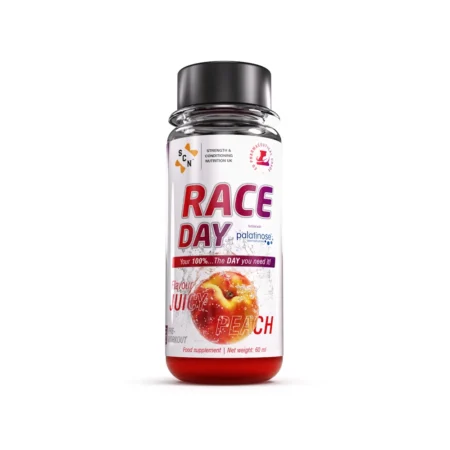
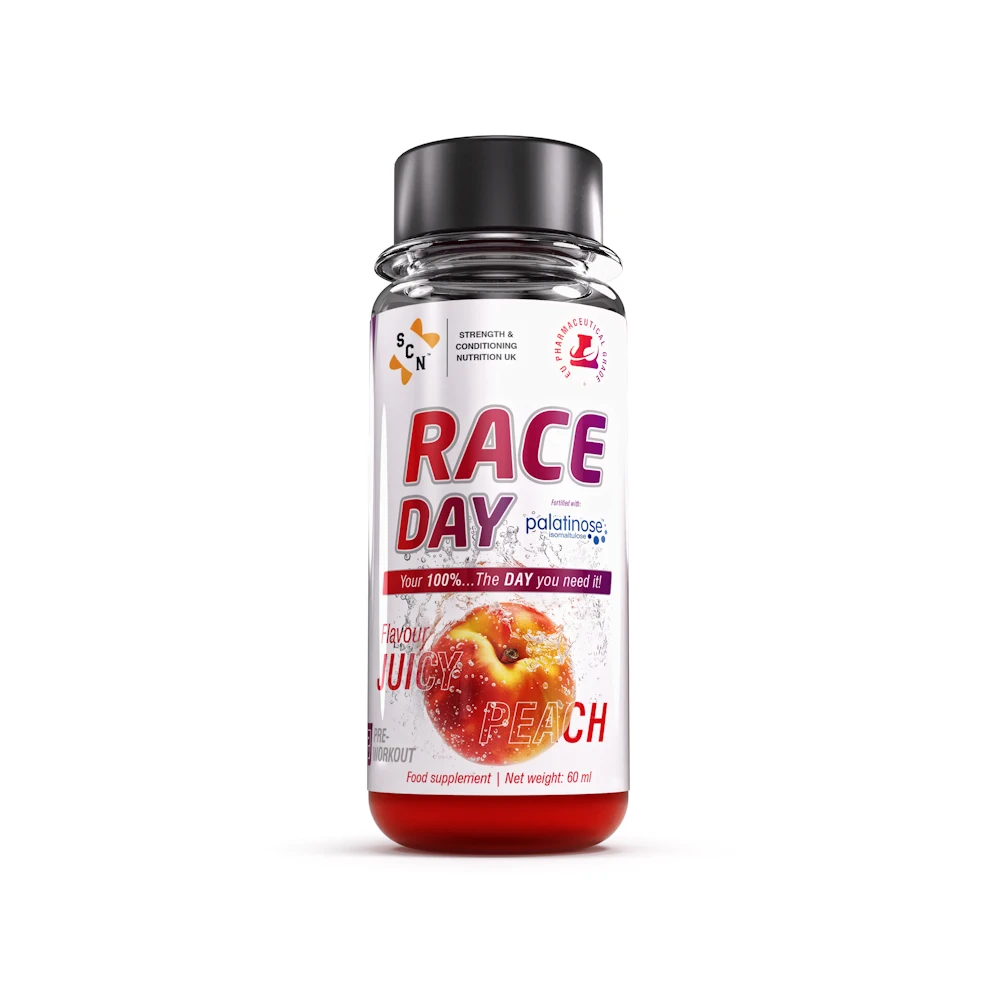
Race Day – The Pre-Race Shot Built for Endurance Athletes
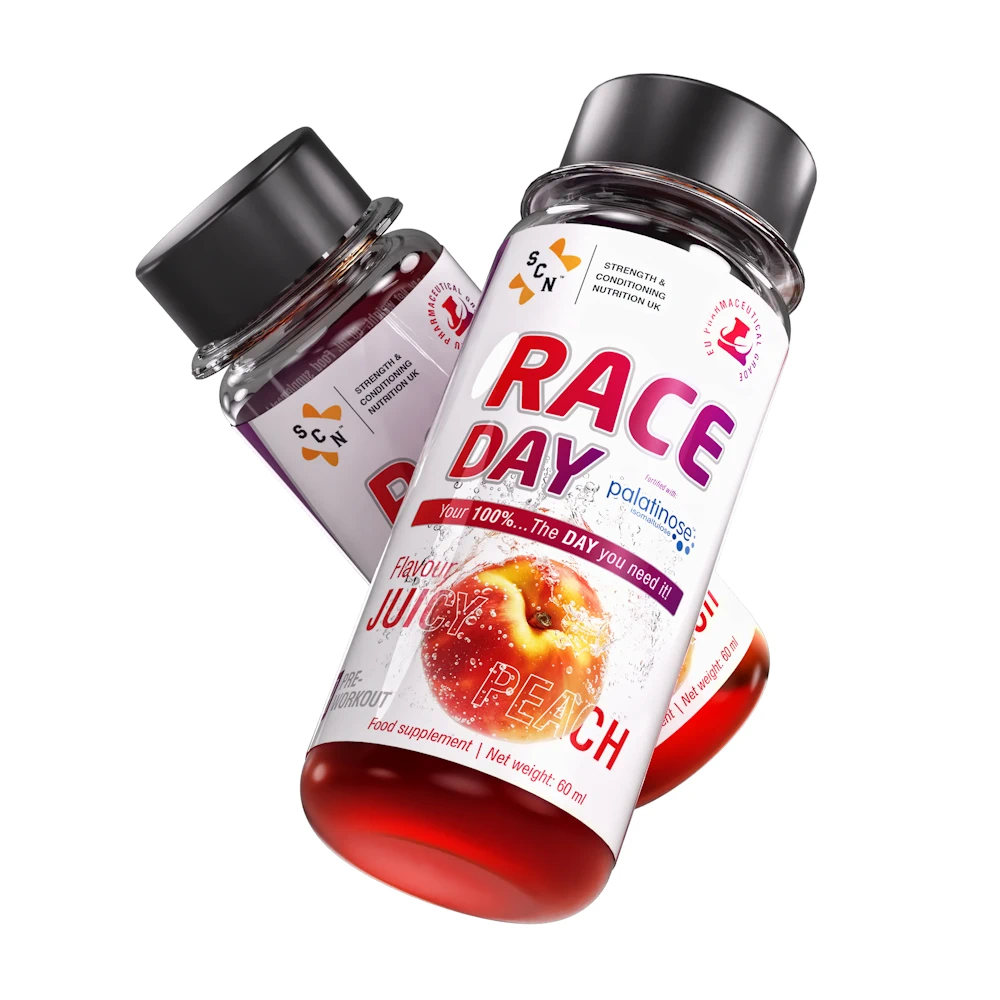
One 60 ml vial, 10–15 minutes before warm-up. Race Day is the first pre-race shot formulated specifically for endurance and high-intensity endurance sport – not a bodybuilding pre-workout in a smaller bottle. Thirteen active ingredients in liquid form, ready to absorb from the first sip, built to carry you through two hours and beyond.
Slow-release Palatinose™ energy, a full 3,000 mg of citrulline malate, 3,000 mg of beta-alanine, dual-form arginine, taurine, glucuronolactone and a dual-source caffeine stack from caffeine anhydrous and guarana – all in one vial. Our athletes call it “the PR vial”, because so many of them set personal records with it.
Why a pre-race shot and not a scoop of powder?
Race morning is not the moment for a 500 ml shaker of powder sitting in your stomach. A pre-race shot gives you the full dose of performance ingredients in 60 ml of liquid: nothing to mix, nothing to measure, no gritty beta-alanine clumps, and almost no volume in the gut when the gun goes. Liquid ingredients are already dissolved, so absorption begins as soon as the vial is down – that is why SCN™ recommends taking Race Day just 10–15 minutes before warm-up instead of the 45–60 minutes most powders require.
Most pre-workouts on the market were designed for a 60-minute strength session: a huge stimulant spike, a pump, and a crash. Endurance athletes need something different – steady energy, better oxygen delivery, delayed muscle acidosis and a controlled stimulant curve that lasts as long as the race does. That is exactly what Race Day was built around.
Which athlete are you?
🏁 Racing this weekend?
Road race, triathlon, criterium, open-water swim, cross-country, time trial. You want everything working from the first kilometre: nitric oxide up, caffeine peaking as the race gets hard, buffering capacity ready for the surges, and a carbohydrate source that will not spike and crash before the start.
Race Day: one full vial 10–15 minutes before warm-up.
⏱ Long, hard training sessions?
Threshold intervals, brick sessions, hill repeats, 2–3 hour group rides, tempo long runs. Race Day turns a flat Tuesday into a quality session. Palatinose™ feeds the work steadily, citrulline and arginine support blood flow to the working muscle, and the stimulant stack keeps your perceived effort down when the legs say otherwise.
Race Day: half to one vial depending on body weight and caffeine tolerance.
🧠 Masters, amateur or caffeine-sensitive?
You want the performance and the focus without the jitters. Start with half a vial (30 ml). You still get 3,000 mg of Palatinose™, 1,500 mg of citrulline malate, 1,500 mg of beta-alanine and a moderate caffeine dose – plus B-vitamins and vitamin C for energy metabolism and antioxidant support.
Race Day: 30 ml, 10–15 minutes before warm-up.
What Race Day does for you
- Supports blood flow and oxygen delivery to working muscle through the citrulline–arginine nitric oxide pathway
- Supports VO₂max-type efforts – more oxygen and nutrient supply when intensity climbs
- Delays the burn – beta-alanine raises muscle carnosine, the buffer against acidosis during high-intensity endurance work
- Steady energy for 2+ hours – Palatinose™ releases glucose slowly and supports fat oxidation during exercise
- Lower perceived effort – caffeine and guarana reduce how hard the effort feels, helping you sustain pace longer
- Sharper focus and reaction time – the caffeine–taurine–glucuronolactone combination studied in energy-drink research
- Supports faster heart-rate recovery between intervals and after the finish
- Supports fat and glucose metabolism – thiamine, niacin and B6 are co-factors in energy metabolism; caffeine supports fat mobilisation
- Reduces soreness and fatigue afterwards – citrulline malate is shown to lower post-exercise soreness and RPE
- Supports normal immune function during heavy training blocks with 500 mg vitamin C
How fast does it work, and how long does it last?
Because Race Day is a liquid, nothing has to dissolve in your stomach first. Caffeine taken in solution appears in the blood within minutes and reaches peak concentration roughly 30–60 minutes after ingestion[1] – so a vial taken 10–15 minutes before warm-up means caffeine is peaking exactly when the race or main set gets hard. Caffeine’s half-life of several hours then keeps the stimulant effect working through a two-hour-plus event.[1]
The energy side runs on a different clock: Palatinose™ (isomaltulose) is digested slowly, releasing glucose over roughly two hours while blood sugar stays stable and fat oxidation stays higher than with fast sugars.[2,3] Together, the two curves – fast-rising stimulants and slow-releasing carbohydrate – are what give Race Day its long, even window of action.
Every ingredient in Race Day – and why it is there
All 13 actives are written out below in full. Doses are per 60 ml vial.
Palatinose™ (isomaltulose) 6,000 mg
Palatinose™ is a low-glycaemic carbohydrate made from sugar beet sucrose. The glucose–fructose bond is rearranged from the α-1,2 linkage of sucrose into a much more stable α-1,6 linkage, so our digestive enzymes break it down four to five times more slowly. The result is full carbohydrate energy (4 kcal/g) released gradually, a low and stable blood glucose response, and no insulin spike-and-crash before the start.[2]
In endurance studies, isomaltulose before exercise kept blood glucose steadier and maintained higher fat oxidation during prolonged cycling than maltodextrin or sucrose, sparing glycogen for later in the effort.[2,3] It is vegan, non-GMO, mildly sweet (about half the sweetness of sugar) and tooth-friendly.
- Balanced, sustained energy supply – stretching the power curve
- Low glycaemic response – no pre-start sugar crash
- Supports fat oxidation and glycogen sparing during exercise
- Gentle on the stomach at race intensity
L-Citrulline Malate 1:1 3,000 mg
L-citrulline is one of the three amino acids of the urea cycle, alongside L-arginine and L-ornithine. Taken orally it bypasses the liver and is converted to arginine in the kidneys, raising plasma arginine – and therefore nitric oxide production – more effectively than arginine itself. Nitric oxide relaxes blood vessels, improving blood flow and oxygen delivery to working muscle. Citrulline also accelerates ammonia clearance, one of the metabolic by-products that promotes fatigue in long efforts.
Citrulline malate 1:1 binds each citrulline to a molecule of malic acid, an intermediate of the Krebs cycle that supports aerobic ATP production. Meta-analyses of placebo-controlled trials show citrulline malate increases repetitions to fatigue in high-intensity exercise[4] et significantly lowers perceived exertion and muscle soreness at 24–48 hours after exercise.[5] Race Day combines citrulline malate with arginine HCl and arginine AKG to feed the nitric oxide pathway from both ends.
Beta-Alanine 3,000 mg
Beta-alanine is the rate-limiting precursor of carnosine, the dipeptide (beta-alanine + histidine) that buffers hydrogen ions inside the muscle fibre. When intensity rises above threshold, acidosis builds and contraction fails – carnosine delays that point. The International Society of Sports Nutrition position stand concludes that beta-alanine improves exercise capacity and performance, especially in efforts lasting 1–4 minutes and in high-intensity endurance events.[6] A meta-analysis across 40 studies confirmed the greatest benefit for exercise in the 30-second to 10-minute range – exactly the surges, climbs and finishing kicks that decide endurance races.[7]
- Buffers muscle acidosis and delays the burn
- Supports anaerobic and aerobic endurance
- Supports power output in surges and sprints
- Lets you hold a harder pace for longer
Note: a tingling sensation (paraesthesia) 15–20 minutes after ingestion is a normal, harmless effect of beta-alanine. For the full chronic benefit, beta-alanine works best with daily loading – Race Day’s 3,000 mg on training and race days adds to the carnosine stores you build with daily use of other SCN™ endurance products.
L-Arginine HCl 2,500 mg + Arginine Alpha-Ketoglutarate (AAKG) 1,000 mg
L-arginine is the direct substrate for nitric oxide synthase – the enzyme that produces nitric oxide. Race Day uses two forms: the hydrochloride salt for rapid absorption, and arginine bound to alpha-ketoglutarate (AKG), a Krebs-cycle intermediate. AKG is one of the body’s key nitrogen carriers; it participates in energy production in the Krebs cycle and in the metabolism of proline and hydroxyproline, the amino acids of type I collagen.
Combining arginine with citrulline is deliberate: citrulline sustains plasma arginine over hours, while direct arginine provides the immediate substrate. Together they support blood flow, oxygen and nutrient delivery during the effort and help the heart rate settle faster between intervals and after the finish.
Taurine 1,250 mg
Taurine is a sulphur-containing amino acid concentrated in skeletal and cardiac muscle, where it regulates calcium handling in the contracting fibre, cell hydration and osmotic balance, and acts as an antioxidant. A meta-analysis of endurance trials found that a single dose of 1–6 g taurine taken 1–3 hours before exercise improved endurance performance – time to exhaustion and time-trial performance – in trained and untrained participants.[8]
- Supports cellular hydration and electrolyte balance
- Supports calcium regulation and muscle contraction
- Supports central nervous system function and focus
- Antioxidant support during intense exercise
Glucuronolactone 1,250 mg
D-glucurono-γ-lactone is a natural metabolite of glucose, present in the body in equilibrium with glucuronic acid, which participates in phase II detoxification (glucuronidation). It is a classic energy-drink ingredient, and the research on it comes mostly from that context: when healthy volunteers were given a drink combining glucuronolactone, caffeine and taurine, they showed improvements in aerobic and anaerobic performance, reaction time, concentration and memory compared with placebo.[9] Pre-workout studies with the same combination reported more total repetitions performed in training.[10] In Race Day it is paired with exactly those partners – caffeine, taurine and citrulline – for its synergistic effect on physical and mental performance.
Caffeine Anhydrous 250 mg + Guarana Liquid Extract 22% 500 mg
Caffeine is the most studied legal ergogenic aid in sport. The 2021 International Society of Sports Nutrition position stand concludes that 3–6 mg/kg of caffeine consistently improves endurance performance, lowers rating of perceived exertion and enhances alertness and vigilance.[1] It works mainly through adenosine-receptor antagonism in the central nervous system – effort feels easier – and supports fat mobilisation, which can spare glycogen in longer events.
Guarana (Paullinia cupana), the Amazonian seed also known as Brazilian cocoa, contains caffeine naturally bound to tannins and polyphenols, alongside theobromine and theophylline. Its caffeine is released more gradually than pure caffeine anhydrous, so the two sources together give Race Day a fast rise and a longer plateau rather than a single spike. Guarana is studied for delaying fatigue, supporting aerobic capacity and improving mental alertness.
- Lower perceived effort at a given pace
- Supports endurance and time-trial performance
- Supports fat oxidation and glycogen sparing
- Sharper focus, alertness and reaction time
Competition note: caffeine was removed from the WADA Prohibited List in 2004 and remains on the Monitoring Program only. Total caffeine per full vial ≈ 360 mg.
Vitamin C (ascorbic acid) 500 mg
Intense endurance exercise generates free radicals and temporarily suppresses immune defence. Vitamin C contributes to the protection of cells from oxidative stress, to normal immune function during and after intense physical exercise, to normal collagen formation for tendons, ligaments and cartilage, to normal energy-yielding metabolism, to reduced tiredness and fatigue, and it increases iron absorption – important for oxygen transport in endurance athletes.
Niacin (vitamin B3) 150 mg
Niacin is the precursor of NAD⁺ and NADP⁺, the coenzymes at the centre of every energy-producing pathway in the cell – glycolysis, the Krebs cycle and the electron transport chain. The body cannot store it, so athletes with high energy turnover need constant replenishment. Niacin contributes to normal energy-yielding metabolism, normal functioning of the nervous system, normal psychological function and the reduction of tiredness and fatigue.
Note: at this dose, nicotinic acid may cause a temporary, harmless flushing or warmth of the skin in some people.
Vitamin B1 (thiamine) 39.5 mg
Thiamine, as thiamine pyrophosphate, is the coenzyme that converts pyruvate into acetyl-CoA – the gateway from carbohydrate into the Krebs cycle. The more carbohydrate you burn, the more thiamine you use. Thiamine contributes to normal energy-yielding metabolism, normal functioning of the nervous system, normal psychological function and normal heart function. Research on thiamine and exercise suggests improved carbohydrate metabolism with lower lactate and ammonia accumulation during exercise.
Vitamin B6 (pyridoxine) 9.52 mg
Vitamin B6 is a coenzyme in over 100 reactions, including the breakdown of muscle glycogen (glycogen phosphorylase) and amino-acid metabolism – both heavily used in endurance exercise. It is water-soluble and lost in sweat and urine, so losses rise with training volume. Vitamin B6 contributes to normal energy-yielding metabolism, normal protein and glycogen metabolism, normal red blood cell formation, normal functioning of the nervous system, normal psychological function, normal immune function and the reduction of tiredness and fatigue.
Full formula – per 60 ml vial
| Active ingredient | Per vial (60 ml) | Per half vial (30 ml) |
|---|---|---|
| Palatinose™ (isomaltulose) | 6,000 mg | 3,000 mg |
| L-Citrulline Malate 1:1 | 3,000 mg | 1,500 mg |
| Beta-Alanine | 3,000 mg | 1,500 mg |
| L-Arginine HCl | 2,500 mg | 1,250 mg |
| Taurine | 1,250 mg | 625 mg |
| Glucuronolactone | 1,250 mg | 625 mg |
| Arginine Alpha-Ketoglutarate (AAKG) | 1,000 mg | 500 mg |
| Vitamine C | 500 mg | 250 mg |
| Guarana Liquid Extract 22% (≈110 mg caffeine) | 500 mg | 250 mg |
| Caffeine Anhydrous | 250 mg | 125 mg |
| Niacin (vitamin B3) | 150 mg | 75 mg |
| Vitamin B1 (thiamine) | 39.5 mg | 19.75 mg |
| Vitamin B6 (pyridoxine) | 9.52 mg | 4.76 mg |
Other ingredients: purified water, citric acid, sorbitol, natural flavour (peach), sucralose.
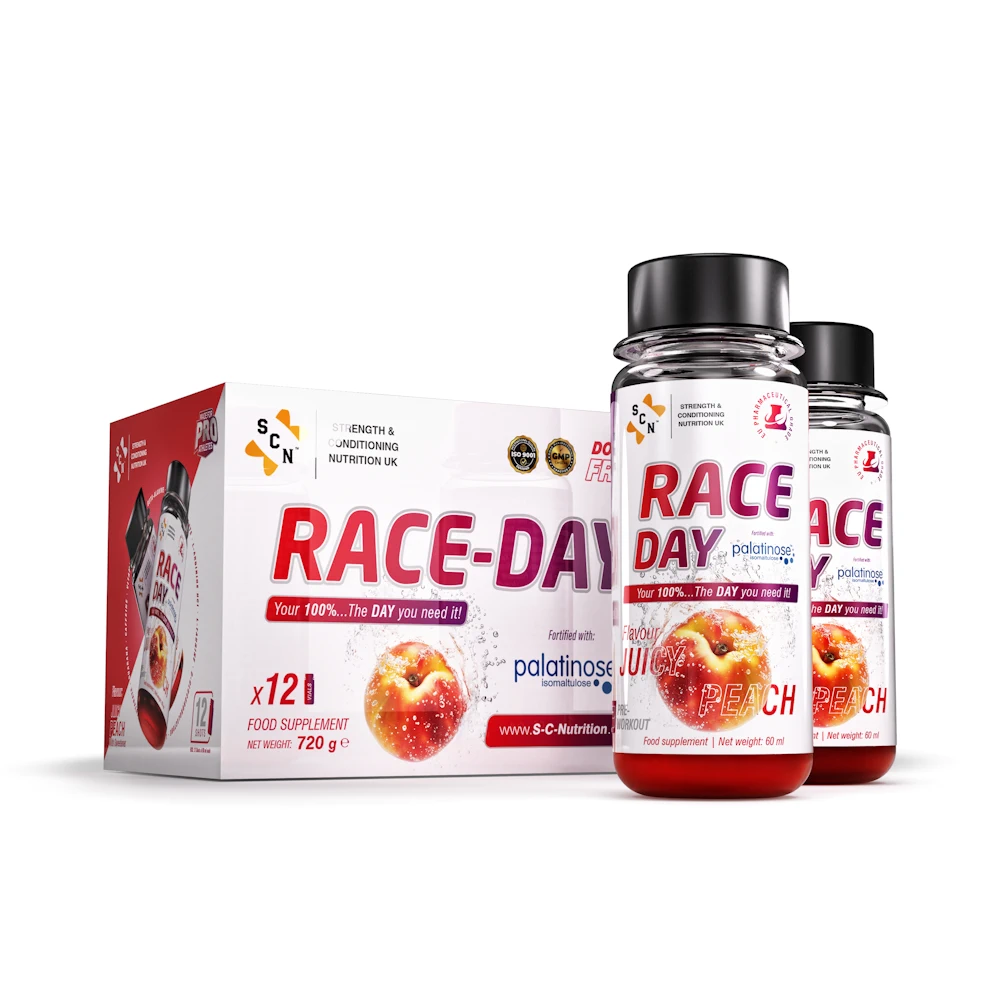
Pack: 12 vials × 60 ml per box. Goût : Peach.
How to use your pre-race shot
| Athlete | Dose | Timing |
|---|---|---|
| Lighter-weight or amateur athletes, first-time users, caffeine-sensitive | 30 ml (half vial) | 10–15 minutes before warm-up |
| Heavier or professional athletes, experienced caffeine users | 60 ml (one vial) | 10–15 minutes before warm-up |
- Shake gently before opening. Drink neat or follow with a mouthful of water.
- Test your dose in training before using it on race day – never try a new protocol in competition.
- Maximum one vial per day. Avoid other caffeine sources within the same 4–6 hours.
- For events over 90 minutes, pair Race Day with Endurance Carbs or Carbo⁶-Lytes¹¹ during the race, and Pro Endurance Recovery afterwards.
The SCN™ race-day protocol
Before
Race Day 10–15 min before warm-up. On daily-training days, build carnosine and nitrate stores with CREndurance Active¹³ et Bicarb-Lytes¹⁰ Zéro.
During
Endurance Carbs for 60–90 g carbs/hour, Endurance i-BCAA 6:1:1 for muscle protection and electrolytes.
After
Pro Endurance Recovery within 30 minutes, then Complete x4 protein with your next meal.
Pre-race shot FAQ
What is a pre-race shot?
A pre-race shot is a concentrated liquid pre-workout designed to be taken shortly before competition or a hard session. Unlike a powder, it needs no mixing and carries very little volume into the stomach. Race Day is a 60 ml pre-race shot built specifically for endurance sport, combining slow-release carbohydrate, nitric oxide precursors, a muscle buffer and a dual-source stimulant stack.
How long before my race should I take Race Day?
10–15 minutes before you start your warm-up. Because it is a liquid, absorption begins immediately; caffeine peaks around 30–60 minutes later, right as the race gets hard.
How long does the effect last?
Palatinose™ releases energy over roughly two hours, and caffeine’s multi-hour half-life keeps the stimulant effect working across a two-hour-plus event. Most athletes describe a long, even window rather than a spike and crash.
How much caffeine is in one vial?
Approximately 360 mg per full vial (250 mg caffeine anhydrous plus about 110 mg from guarana). Half a vial provides around 180 mg. Start with half if you are new to it or sensitive to caffeine.
Will it upset my stomach before a race?
Race Day was designed to avoid exactly that: only 60 ml of liquid, no fast sugars, and Palatinose™, which is gentle on digestion. As with any race nutrition, test it in training first.
Is Race Day legal in competition?
Yes. None of the ingredients appears on the WADA Prohibited List. Caffeine has been off the list since 2004. SCN™ products are produced in a doping-free, cross-contamination-safe facility.
Can I use Race Day every day?
It is designed for races and key sessions. For everyday training we recommend building your base with daily-use SCN™ endurance products and saving Race Day for the days that count – that also keeps your caffeine response sharp.
Is it vegan?
Yes – every ingredient in Race Day is suitable for vegans.
Race Day – 12 × 60 ml Pre-Race Shots
Single box · 3 boxes with 10% discount · 6 boxes with 15% discount
Shipped from Europe · Doping-free & cross-contamination safe · Worldwide delivery
Scientific references
- Guest NS et al. International Society of Sports Nutrition position stand: caffeine and exercise performance. J Int Soc Sports Nutr. 2021;18:1.
- König D et al. Substrate utilization and cycling performance following Palatinose™ ingestion: a randomized, double-blind, controlled trial. Nutrients. 2016;8(7):390.
- Oosthuyse T et al. Comparison of energy supplements during prolonged exercise for maintenance of cardiac function: carbohydrate only versus carbohydrate plus whey or casein hydrolysate / isomaltulose. Appl Physiol Nutr Metab. 2015; and Achten J et al. Exogenous oxidation of isomaltulose is lower than that of sucrose during exercise in men. J Nutr. 2007;137(5):1143-8.
- Vårvik FT, Bjørnsen T, Gonzalez AM. Acute effect of citrulline malate on repetition performance during strength training: a systematic review and meta-analysis. Int J Sport Nutr Exerc Metab. 2021;31(4):350-358.
- Rhim HC et al. Effect of citrulline on post-exercise rating of perceived exertion, muscle soreness, and blood lactate levels: a systematic review and meta-analysis. J Sport Health Sci. 2020;9(6):553-561.
- Trexler ET et al. International Society of Sports Nutrition position stand: beta-alanine. J Int Soc Sports Nutr. 2015;12:30.
- Saunders B et al. β-alanine supplementation to improve exercise capacity and performance: a systematic review and meta-analysis. Br J Sports Med. 2017;51(8):658-669.
- Waldron M et al. The effects of an oral taurine dose and supplementation period on endurance exercise performance in humans: a meta-analysis. Sports Med. 2018;48(5):1247-1253.
- Alford C, Cox H, Wescott R. The effects of Red Bull Energy Drink on human performance and mood. Amino Acids. 2001;21(2):139-150.
- Hoffman JR et al. Examination of a pre-exercise, high energy supplement on exercise performance. J Int Soc Sports Nutr. 2009;6:2; Gonzalez AM et al. Effect of a pre-workout energy supplement on acute multi-joint resistance exercise. J Sports Sci Med. 2011;10(2):261-266.
Food supplement. Do not exceed the recommended daily dose. Food supplements should not be used as a substitute for a varied, balanced diet and a healthy lifestyle. High caffeine content (≈360 mg per 60 ml vial) – not recommended for children or pregnant or breast-feeding women. Keep out of reach of young children. Consult your physician before use if you have a medical condition or take medication. This page is for education and general information and is not a substitute for medical advice.