
Every kilometre you run, every climb you ride and every thought you think is paid for in one currency: cellular energy. And one of the molecules that keeps that currency flowing is NADH. It is gaining attention with endurance athletes chasing more from their training, and with people who want to stay sharp and energetic as the years go by.
In this guide we explain what NADH is, the key NADH benefits being researched for sport and for healthy ageing, how NADH compares with NMN, and what the science honestly says so far.
Key takeaways
- NADH is the “charged” form of NAD, a coenzyme found in every living cell.
- It carries electrons to your mitochondria, where they are turned into ATP, the energy your muscles and brain run on.
- NAD levels tend to fall with age, and hard exercise shifts the balance between NAD+ and NADH.
- NMN and NR are precursors your body must convert. NADH is the active, energy-carrying form itself.
- The research is promising but still developing, so quality and realistic expectations matter.
What is NADH?
NADH stands for nicotinamide adenine dinucleotide + hydrogen. It is made in the body from vitamin B3 (niacin) and exists in two forms that constantly switch back and forth:
- NAD+ is the “empty” form. It collects electrons when you break down carbohydrates and fats.
- NADH is the “loaded” form. It carries those electrons to the mitochondria.
Think of NADH as a delivery truck. Your food is the fuel, the mitochondria are the power plant, and NADH drives the energy from one to the other. Inside the mitochondria, each NADH molecule helps generate roughly two and a half to three molecules of ATP (adenosine triphosphate), the energy your cells actually spend.
No trucks, no deliveries. That is why NADH sits at the centre of cellular energy production.
Why NAD and NADH matter more as you train and as you age
Two things put pressure on your NAD system.
Intense exercise. During hard efforts your muscles burn energy faster than they can rebuild it. Studies of human skeletal muscle show that just before exhaustion, NADH builds up while NAD+ in muscle and blood drops, a sign that energy production is struggling to keep up. For endurance athletes, supporting this system is about sustaining output when it counts.
Ageing. NAD levels naturally decline over time. Because NAD is involved in energy production, cellular repair and the activity of sirtuins (enzymes linked to healthy ageing), this decline is one reason NAD support has become a major topic in longevity science.
NADH benefits for endurance athletes
At S-C Nutrition, endurance sport is our home ground. Here is why NADH interests runners, cyclists, triathletes, swimmers and other endurance athletes:
- Fuels ATP production. NADH delivers electrons straight to the mitochondrial energy chain, the engine room of aerobic performance.
- Supports aerobic capacity. Endurance depends on how efficiently your mitochondria produce energy with oxygen, and NADH is a core part of that process.
- Supports mitochondrial function. More efficient mitochondria are one of the key adaptations athletes chase through training.
- Helps balance the NAD+/NADH ratio. Hard sessions disturb this balance, and maintaining it is linked with fatigue resistance.
- Supports focus in the late stages. Your brain is one of the most energy-hungry organs, and decision-making in the final kilometres needs fuel too.
- Involved in dopamine production. NADH plays a role in the pathway that makes dopamine, a neurotransmitter linked with motivation and drive.
- Antioxidant role. NADH has antioxidant properties, relevant for athletes whose training increases oxidative stress.
- Stimulant-free energy. NADH works at the cellular level rather than through caffeine-style stimulation, so it can sit alongside your existing fuelling strategy.
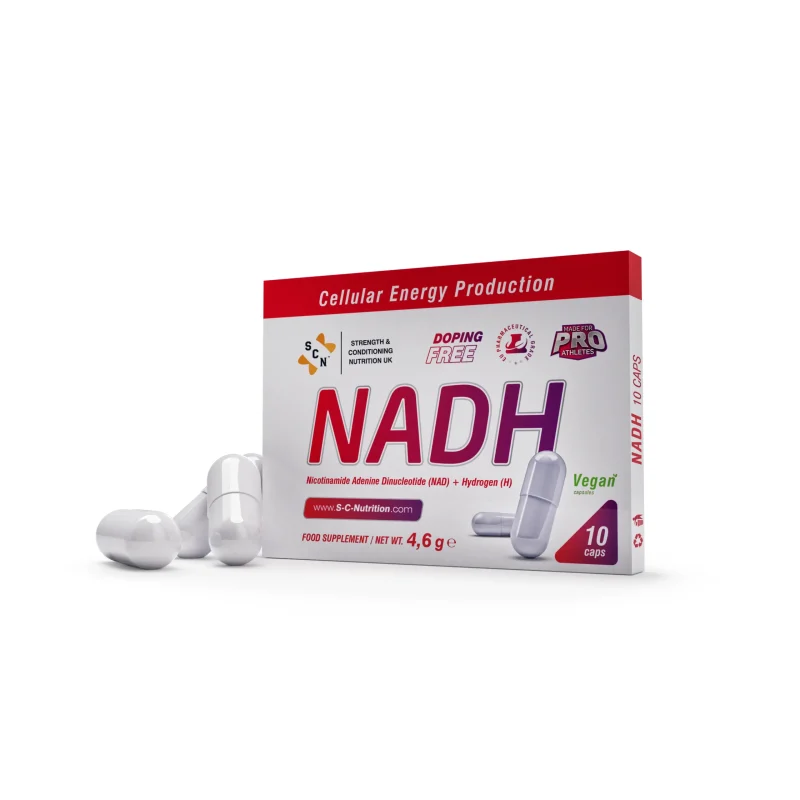
SCN NADH – Cellular Energy Production
Stabilised NADH in capsules, 10 mg per capsule, one a day. Built for athletes who want to support energy at the cellular level.
Shop NADHNADH benefits for cellular health, brain health and healthy ageing
You do not need to be an athlete to care about energy. These are the reasons NADH is on the radar of the wellbeing and longevity community:
- Supports everyday energy. The same mitochondrial process that powers a marathon powers your working day.
- Supports mental clarity. Brain cells need a constant, high supply of ATP to stay sharp.
- Supports concentration and memory. Energy-demanding cognitive tasks rely on healthy mitochondrial function.
- Linked to neurotransmitter production. NADH is involved in pathways producing dopamine, which influences mood and motivation.
- Connected to sirtuin activity. Sirtuins depend on the NAD system and are among the most studied enzymes in ageing research.
- Helps counter oxidative stress. Its antioxidant role supports cells against everyday free-radical damage.
- Supports cellular repair processes. NAD participates in DNA repair, a key area of healthy ageing science.
- Addresses age-related NAD decline. Supporting the NAD pool is the main reason people add NAD-related supplements to a longevity routine.
NADH vs NMN vs NR: what’s the difference?
This is one of the most searched questions in the NAD world, and the answer is simpler than it looks. NMN and NR are building blocks your body converts into NAD. NADH is the active, energy-carrying form itself.
| NADH | NMN | NR | |
|---|---|---|---|
| What it is | The active, reduced form of NAD | A direct precursor to NAD+ | A precursor, converted to NMN then NAD+ |
| Conversion needed | No, already the energy carrier | One step | Two steps |
| Popular for | Cellular energy, mental clarity, performance | Long-term NAD+ support, healthy ageing | Long-term NAD+ support, healthy ageing |
| Key consideration | Delicate molecule, needs a stabilised form | Widely researched in longevity | Widely researched in longevity |
The short version: if your priority is energy you can use, especially for training and mental performance, NADH is the most direct route. If your focus is purely long-term NAD+ levels, precursors like NMN are also popular. Some people use both.
What does the research say?
We believe you deserve honesty, not hype. Most human research on oral NADH comes from small clinical trials, often pairing NADH with coenzyme Q10, and fewer studies have looked specifically at healthy athletes.
A 2026 network meta-analysis in Frontiers in Nutrition compared NAD precursors for fatigue-related outcomes. NADH ranked most favourably for perceived fatigue, although the authors described the result as suggestive rather than conclusive. In short: an encouraging signal, and more research is needed.
What is well established is the biology: NADH is essential for making ATP, and your mitochondria cannot produce energy without it.
NADH and CoQ10: a natural partnership
Inside the mitochondria, NADH hands its electrons to the energy chain, and coenzyme Q10 carries them further along. That is why so much NADH research pairs it with CoQ10. Combining the two, especially with ubiquinol (the active form of CoQ10), supports the energy chain at more than one point.
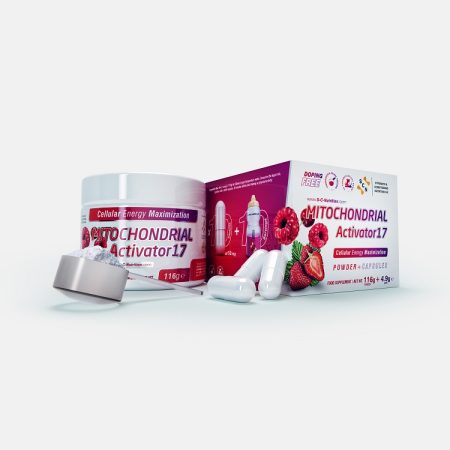
Mitochondrial Activator¹⁷
Ubiquinol, NADH and quercetin in one advanced energy formula, designed to support mitochondrial energy from several angles.
Shop Mitochondrial Activator¹⁷How to take an NADH supplement
- Follow the label. For SCN NADH, that is one capsule a day with water.
- Choose a stabilised form. NADH is sensitive to stomach acid, moisture and heat, so formulation matters.
- Store it properly. Keep the container closed, dry and cool.
- Be consistent. Energy support is about your daily routine, not a one-off dose.
- Check with a professional if you are pregnant, breastfeeding, taking medication or managing a health condition.
Can you get NADH from food?
Small amounts are found in fish, poultry, beef and yeast-based foods. However, NADH is a fragile molecule, and food sources provide only modest amounts. That is why people interested in NADH benefits often turn to a stabilised supplement.
Frequently asked questions
What does NADH do in the body?
NADH carries electrons from the food you eat to your mitochondria, where they are used to produce ATP, the energy your cells run on.
Is NADH better than NMN?
They do different jobs. NMN is a precursor your body converts into NAD+, while NADH is the active energy-carrying form. NADH is often chosen for energy and focus, NMN for long-term NAD+ support.
Is NADH good for athletes?
NADH is central to aerobic energy production, which is why endurance athletes are interested in it. Research in athletes is still limited, so it works best as part of a solid training and nutrition plan.
When is the best time to take NADH?
Many people take it in the morning to fit their daily routine. Always follow the directions on your product label.
Is NADH a stimulant?
No. NADH is a naturally occurring coenzyme that supports energy at the cellular level, not a stimulant like caffeine.
Ready to power your cells?
Whether you are chasing a personal best or simply want to feel sharper and more energetic, supporting your cellular energy starts at the mitochondria. Every SCN product is produced with our 100% doping-free and cross-contamination-safe commitment, so athletes can train with confidence.
Explore more in our Energía | VO2Max y Salud y bienestar ranges.
Disclaimer: This article is for educational and general information purposes only and is not intended to diagnose, treat, cure or prevent any disease. It is not a substitute for advice from a doctor or qualified healthcare professional. Food supplements should not be used as a substitute for a varied, balanced diet and a healthy lifestyle. Do not exceed the recommended daily dose. Keep out of reach of young children. If you are pregnant, breastfeeding, taking medication or have a medical condition, consult your doctor before using any food supplement. Individual results may vary.