Περιγραφή
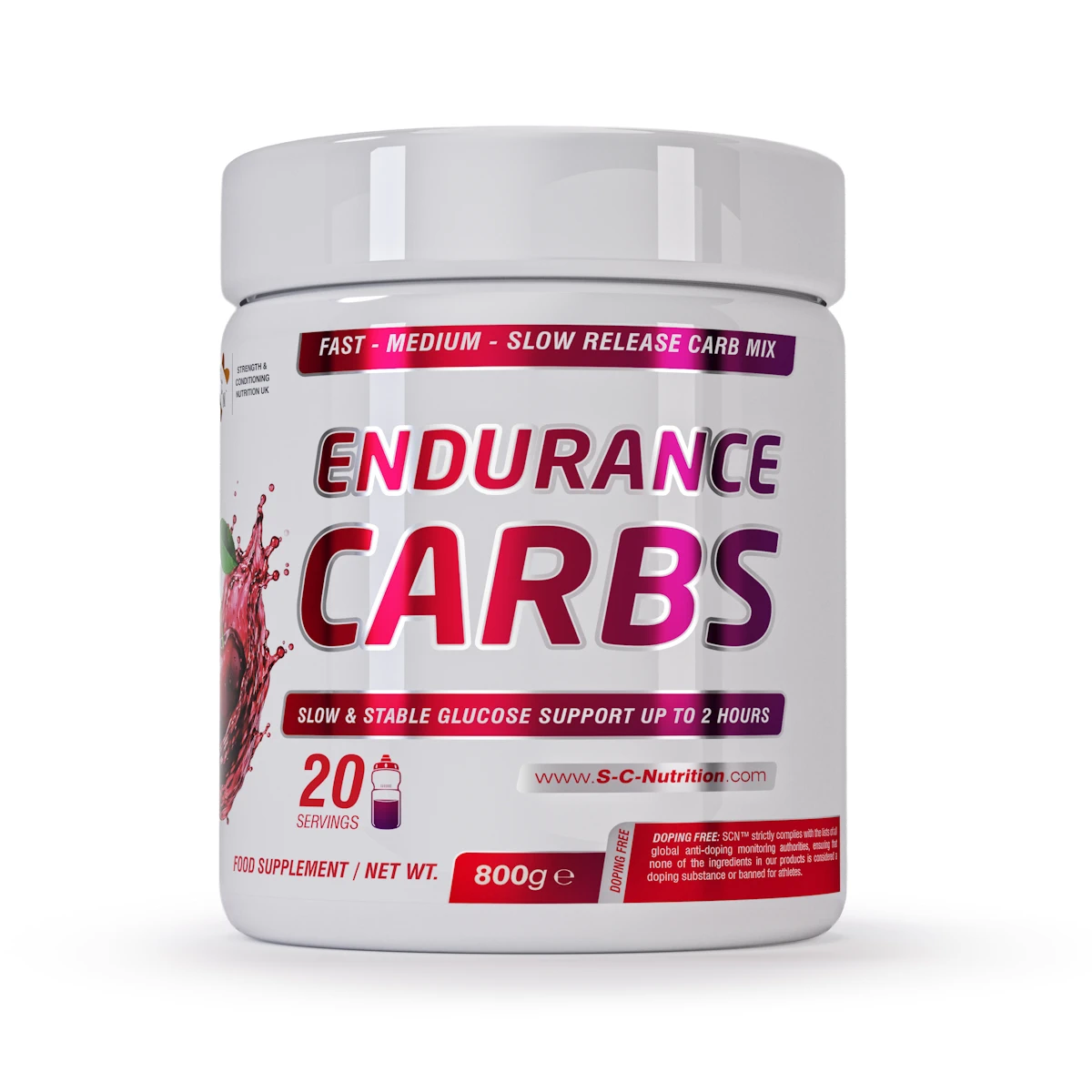
Endurance Carbs — the endurance carbohydrate drink built for the second half of your race
Most carb drinks give you one speed: fast in, fast out, fast crash. Endurance Carbs by SCN™ delivers fuel in layers — six carbohydrates absorbing on three different timelines — so your energy curve looks less like a spike and more like a runway. Fast carbs fire immediately. Slow-release Palatinose™ is still feeding you two hours later. Low-osmolality Cluster Dextrin keeps your stomach calm while you do it.
If you’ve ever felt strong for 45 minutes and hollow for the next 45, this is the fix.
Steady energy
- No spike, no crash — six carbs released fast, medium and slow
- Smooth, consistent power from first sip to last
More fuel absorbed
- Glucose + fructose pathways used together — more usable carbohydrate per hour than any single-sugar drink
- Supports intakes of 60–90 g carbs per hour
Gut-friendly
- Cluster Dextrin + maltodextrin keep osmolality low — minimal bloating or sloshing, even at high intake
- Rapid gastric emptying so fuel and fluid actually arrive
Goes the distance
- Low-GI Palatinose™ extends time to fatigue and lets your body keep burning fat for longer before dipping into reserves
- Built for sessions past the 2-hour mark
Choose your sport — one endurance carbohydrate drink, every discipline
Runners & marathoners
Fuel that empties fast and doesn’t slosh when you run — steady glucose through kilometre 30 and beyond, so the wall arrives later or not at all.
Cyclists & gran fondo riders
Pack 60–90 g of carbohydrate per hour into your bottles without gut shutdown. Multi-pathway absorption is what makes high intake rates possible.
Triathletes & Ironman
One drink that works on the bike and survives the run. Low osmolality means the same bottle sits well when you switch disciplines.
Swimmers & open water
Pre-load 30–40 minutes before the start with a slow-release carb that keeps blood glucose level without a mid-set insulin dip.
Football, rugby & team sports
Repeated high-intensity efforts over 90 minutes, tournaments and back-to-back sessions — a steady glucose supply matters as much as the first burst.
Ultra & trail
Hours of moderate intensity reward Palatinose™’s fat-sparing profile: more fat oxidised early, glycogen saved for the climbs late.
Strength & CrossFit athletes
Intra-workout carbs for long, high-volume sessions — fast dextrose for the next set, slow carbs for the last hour of the session.
Active lifestyles & long days
Hikers, cycle commuters, shift workers with high energy demands — clean, food-like carbohydrate energy with a low glycaemic footprint.
How a multi time-release carbohydrate mix works
Instead of one sugar hitting your bloodstream all at once, Endurance Carbs uses six carbohydrates that absorb and release at different speeds. As one wave of energy starts to fade, the next is already taking over.
Two gut pathways, not one
Glucose-based carbohydrates (dextrose, maltodextrin, Cluster Dextrin, amylopectin) cross the gut wall through the SGLT1 transporter. Fructose uses a completely separate transporter, GLUT5. Using both at once is what researchers call multiple transportable carbohydrates — and it is the single biggest advance in endurance fuelling of the last twenty years.
Fuel hard without wrecking your stomach
The classic endurance dilemma: a drink strong enough to fuel you is often too concentrated for your gut mid-effort. Endurance Carbs solves it with carbohydrates that carry a lot of energy per molecule but contribute very little osmotic pressure — maltodextrin and, above all, Cluster Dextrin.
Keep burning fat for longer
Palatinose™ is a disaccharide of glucose and fructose joined by an alpha-1,6 bond instead of sucrose’s alpha-1,2 bond. That one structural change means digestive enzymes break it down about four to five times more slowly — fully digested, but gradually. Blood glucose stays level, insulin stays low, and your body keeps oxidising fat instead of switching entirely to carbohydrate.
Endurance Carbs vs a typical single-source carbohydrate drink
| Feature | Typical dextrose / maltodextrin drink | Endurance Carbs by SCN™ |
|---|---|---|
| Carbohydrate sources | 1–2 | 6, on three release timelines |
| Absorption pathways | SGLT1 only | SGLT1 + GLUT5 (multiple transportable carbohydrates) |
| Realistic absorption ceiling | ~60 g/h | Up to ~90 g/h |
| Blood glucose profile | Spike then drop | Layered, sustained |
| Slow-release / low-GI component | None | Palatinose™ (4 g) |
| Low-osmolality gut-friendly polymer | Rarely | Cluster Dextrin (2 g) + maltodextrin |
| Liver glycogen support | Minimal | Fructose (8 g) |
| Colouring | Artificial dyes | Natural turmeric |
| Doping-free guarantee | Varies | 100 % doping-free, cross-contamination safe |
Nutrients per serving
Serving size: 1 scoop (40 g) mixed with 200–250 ml of water · Servings per pack: 20 · Καθαρό βάρος: 800 g
| Συστατικό | Per 1 scoop (40 g) | Release speed |
|---|---|---|
| Multi Time-Release Carbohydrate Mix | 35.6 g | |
| Dextrose | 11.2 g | Fast |
| Μαλτοδεξτρίνη | 8.37 g | Fast–medium |
| Fructose | 8 g | Slow (liver) |
| Palatinose™ (Isomaltulose) | 4 g | Slow |
| Cluster Dextrin (Highly Branched Cyclic Dextrin) | 2 g | Medium, low osmolality |
| Αμυλοπηκτίνη | 2 g | Fast–medium |
Glucose-type : fructose ratio ≈ 3.4 : 1 overall, with Palatinose™ contributing further fructose on a delayed release. At 1 scoop per hour you deliver ~36 g carbs; at 2 scoops per hour ~71 g — within the range research supports for events over 2.5 hours.
The six carbohydrates — what each one does and why it’s in the mix
Dextrose — 11.2 g
The sprinter of carbohydrates — first off the blocks, first to arrive.
What it is
Dextrose is pure D-glucose, chemically identical to the glucose already circulating in your blood. It needs no digestion before absorption, passing straight through the intestinal wall via the SGLT1 transporter — giving it one of the fastest, highest glycaemic responses of any carbohydrate available.
How it helps an athlete
When you’re deep into a hard session and your legs suddenly feel empty, dextrose is the ingredient that answers immediately. It crosses into your bloodstream almost as fast as you swallow it, topping up blood glucose the instant it starts to dip — so your muscles and brain don’t run short exactly when it matters: the last interval, the final sprint, extra time.
Sport benefits
- Immediate blood glucose replenishment during high-intensity efforts
- Rapid muscle glycogen resynthesis in the post-exercise window
- Delays central fatigue by keeping brain glucose supply stable
- Supports repeated high-intensity efforts (sprints, intervals)
- Fast-acting fuel for the final push or late-race kick
- Reduces perceived exertion during prolonged exercise
- Works with the mix’s slower carbs to maintain a steady energy curve
- Supports glucose uptake into muscle during the recovery window
Health benefits
- Quick recovery from energy dips during long or demanding days
- Supports normal cognitive function via stable blood glucose
- Easily digested with no breakdown required — gentle on sensitive stomachs
- Supports rapid rehydration protocols when combined with electrolytes
- Contributes to normal energy-yielding metabolism
- Helps maintain concentration and alertness during prolonged effort
- Supports well-timed recovery nutrition around the glycogen window
- Non-allergenic and easily tolerated by most people
Maltodextrin — 8.37 g
The steady backbone that carries the load without weighing you down.
What it is
Maltodextrin is a polysaccharide derived from corn starch — chains of glucose of varying length. Despite technically being a “complex” carbohydrate, it still digests and absorbs quickly with a high glycaemic index, but at a notably lower osmolality than an equivalent amount of straight glucose, meaning it pulls less water into the gut and is far better tolerated at higher concentrations.
How it helps an athlete
Maltodextrin lets us pack Endurance Carbs with a serious amount of usable fuel without turning the drink into a heavy syrup that sits in your stomach. It dissolves easily, empties from the stomach quickly, and delivers glucose to working muscle at a pace your body can actually use — so you can fuel hard efforts without the gut discomfort that comes with over-concentrated, over-sweetened drinks.
Sport benefits
- High energy density without excessive sweetness or gut load
- Rapid gastric emptying supports fluid and fuel delivery together
- Helps maintain blood glucose during long-duration training or competition
- Lower osmolality than dextrose or sucrose supports better hydration
- Reduces risk of GI distress at high carbohydrate-intake rates
- Supports high carbohydrate oxidation rates during exercise
- Broadens the release curve alongside the mix’s simple sugars
- Useful for pre-event carb-loading due to easy digestibility
Health benefits
- Gentle on the digestive system, well tolerated even in higher doses
- Supports normal energy metabolism
- Clean energy source with minimal digestive burden
- Neutral flavour that doesn’t interfere with other nutrients in a blend
- Supports the glycogen replenishment needed for daily recovery
- Non-irritating to the gut lining, suitable for repeated daily use
- Practical energy source for people with high daily energy demands
- Mixes cleanly, supporting consistent tolerance of the full formula
Fructose — 8 g
The carbohydrate that plays by a different set of rules.
What it is
Fructose is a monosaccharide absorbed via the GLUT5 transporter — a completely separate gut pathway from the one glucose and dextrose use. It is metabolised primarily in the liver, where it directly replenishes liver glycogen and can feed into gluconeogenesis and lactate, which working muscle then oxidises.
How it helps an athlete
Because fructose uses a different gut transporter, adding it alongside dextrose and maltodextrin lets your body absorb more total carbohydrate per hour than a single-sugar drink ever could. Research on multiple transportable carbohydrates shows glucose-plus-fructose combinations can lift exogenous carbohydrate oxidation from the ~1 g/min glucose ceiling to 1.4–1.75 g/min — more real, usable fuel exactly when glycogen stores start running low late in a session.
Sport benefits
- Increases total carbohydrate oxidation rate when paired with glucose-based sugars
- Directly replenishes liver glycogen, key for sustained blood glucose in long events
- Reduces reliance on muscle glycogen late in exercise
- Supports higher carbohydrate intake rates without GI overload
- Produces a smaller insulin spike compared to glucose-only drinks
- Helps delay fatigue in events lasting over 90 minutes
- Supports liver-driven glucose production during prolonged output
- Widens the total energy delivery “pipe” alongside dextrose
Health benefits
- A naturally occurring sugar found in fruit, familiar to the digestive system
- Lower glycaemic impact than glucose on its own
- Supports liver glycogen stores, important for steady energy between meals
- Contributes to normal energy-yielding metabolism
- Doesn’t rely on insulin for cellular uptake
- Can help moderate blood sugar swings when paired with other carb sources
- Supports steadier, less spiky energy release as part of a blend
- A well-tolerated sugar source used throughout the food supply
Palatinose™ (Isomaltulose) — 4 g
The slow-burning marathon runner of sugars.
What it is
Palatinose™ (isomaltulose) is a naturally occurring disaccharide of glucose and fructose, joined by an alpha-1,6 glycosidic bond rather than the alpha-1,2 bond found in ordinary sucrose. That single structural difference means digestive enzymes break it down far more slowly — it is still fully digested, but the glucose reaches your bloodstream gradually instead of all at once. It is produced from beet sugar by enzymatic conversion and carries an EU-authorised health claim for a lower blood glucose rise.
How it helps an athlete
Where dextrose delivers a rapid burst, Palatinose™ carries that energy forward. It releases glucose steadily over hours rather than minutes, keeping blood sugar level and avoiding the crash that follows a sugar spike — letting your body lean on fat oxidation for longer before it has to dip further into carbohydrate stores. In the König 2016 trial this translated into a measurable improvement in cycling time-trial performance versus maltodextrin.
Sport benefits
- Low, steady glycaemic response — no spike-and-crash pattern
- Extends time to fatigue in long-duration endurance events
- Helps preserve muscle and liver glycogen for later in exercise
- Supports higher fat oxidation rates during steady-state training
- Sustained energy release well suited to events lasting 2+ hours
- Smaller insulin response than fast sugars produce
- Complements fast carbs for a complete fast-to-slow release curve
- Supports stable energy across long training blocks without constant refuelling
Health benefits
- Low glycaemic index supports stable blood sugar levels
- Fully digested and absorbed, so it doesn’t cause the GI upset fibre can
- Tooth-friendly, non-cariogenic sugar source
- Supports normal energy metabolism without a sharp insulin demand
- Naturally derived from beet sucrose via enzymatic conversion
- Supports sustained mental focus and concentration through steady glucose supply
- Gentle on digestion, well tolerated even by sensitive stomachs
- Supports balanced energy levels between meals or sessions
Cluster Dextrin (Highly Branched Cyclic Dextrin) — 2 g
The stealth carbohydrate — fast fuel your stomach never even feels.
What it is
Cluster Dextrin is a highly branched cyclic dextrin produced from waxy corn starch using a branching enzyme that cyclises amylopectin into uniform, high-molecular-weight clusters. Its unique structure gives it a very high molecular weight but extremely low osmolality — so despite emptying from the stomach and absorbing quickly, it doesn’t pull excess water into the gut the way a simple sugar of comparable absorption speed would.
How it helps an athlete
This is the ingredient that solves the classic endurance dilemma: drinks strong enough to properly fuel you are often too concentrated for your stomach to handle mid-effort. Cluster Dextrin lets us pack in real, fast-emptying fuel while keeping the drink genuinely gentle on the gut — so you can keep taking on carbohydrate deep into a race or session without the bloating, sloshing or GI shutdown that ends a lot of athletes’ days early. Studies show faster gastric emptying than glucose or maltodextrin drinks, fewer GI complaints, lower perceived exertion and longer time to exhaustion in elite swimmers.
Sport benefits
- Low osmolality reduces GI distress even at high carbohydrate concentrations
- Rapid gastric emptying keeps fuel and fluid moving to where they’re needed
- Provides fast energy availability without the glycaemic spike of simple sugars
- Supports sustained energy without the crash typical of dextrose-heavy drinks
- Allows higher total carbohydrate intake per hour without stomach discomfort
- Helps maintain steady blood glucose during prolonged, high-output efforts
- Reduces the bloated, sloshing feeling during running and high-impact sports
- Lower rating of perceived exertion during endurance exercise in human trials
Health benefits
- Gentle on the digestive system — suitable for sensitive stomachs
- Low impact on blood sugar relative to how quickly it’s absorbed
- Supports normal hydration status by not drawing excess water into the gut
- Well tolerated at high doses, unlike many simple sugars
- Derived from natural starch through enzymatic, non-chemical processing
- Supports steady energy availability for daily activity, not just training
- Better suited to those prone to bloating or GI sensitivity
- Suitable for repeated, frequent intake across long training days
Amylopectin — 2 g
The branched-network battery pack in the mix.
What it is
Amylopectin is the highly branched fraction of natural starch (as opposed to amylose, starch’s linear fraction). Its branched structure gives digestive enzymes many more points of attack, so it breaks down and releases glucose faster than linear starches — while still contributing to the formula’s steadier overall release profile. Isotope studies confirm amylopectin is oxidised at high rates during exercise, in the same class as glucose and maltodextrin.
How it helps an athlete
Amylopectin fills the gap between the fast sugars and the slow-release ingredients. Because it is a starch, your body treats it like “real food” energy — breaking it into glucose progressively rather than delivering it all at once — helping smooth out the release curve across the full duration of your session.
Sport benefits
- Provides a moderate, steady glucose release that smooths the overall energy curve
- Supports muscle glycogen replenishment during and after training
- Complements the fast and slow carbs for a full-spectrum fuelling strategy
- Digestible starch structure supports sustained rather than spiked energy
- Supports repeated bouts of moderate-to-high intensity effort
- Helps maintain blood glucose through the middle portion of long sessions
- Provides “food-like” energy that’s well tolerated during exercise
- Supports carbohydrate availability for both aerobic and anaerobic systems
Health benefits
- A naturally occurring starch component, familiar to the digestive system
- Contributes to normal energy-yielding metabolism
- Well tolerated in the gut with low likelihood of digestive discomfort
- Supports steadier blood sugar levels as part of a mixed-carbohydrate blend
- A clean, easily utilised source of carbohydrate energy
- Supports recovery nutrition alongside the formula’s other carbohydrate sources
- No added sugars beyond its natural starch composition
- Supports sustained energy for athletes and active individuals generally
How to use Endurance Carbs
Before
Mix 1 scoop (40 g) in 200–250 ml water and drink 30–40 minutes before training or racing. Palatinose™ pre-loads a slow glucose stream while fast carbs top up blood sugar at the start.
During · up to 2.5 h
1 scoop (≈36 g carbs) for every 60 minutes of training. Sip steadily rather than gulping — small, frequent intake keeps gastric emptying smooth.
During · 2.5 h+ or racing
Train your gut to 2 scoops per hour (≈71 g carbs) across a block of long sessions. The glucose + fructose mix is what makes these intake rates tolerable.
Stack it
Pair with Bicarb-Lytes¹⁰ Μηδέν for electrolytes and buffering, Endurance i-BCAA 6:1:1 intra-workout, and Pro Endurance Recovery afterwards.
Tip: concentration matters for comfort. 1 scoop in 250 ml gives a ~14 % solution — well tolerated thanks to the low-osmolality carbs. If you are new to high carb intake, start at 1 scoop per hour and build up over 2–3 weeks.
Endurance carbohydrate drink — your questions answered
How much carbohydrate per hour should an endurance athlete take?
Current sports-nutrition consensus: 30–60 g/h for 1–2.5 hours, and up to 90 g/h for events over 2.5 hours — but only when the drink contains multiple transportable carbohydrates (glucose + fructose). Endurance Carbs is formulated exactly for this: 1 scoop ≈ 36 g, 2 scoops ≈ 71 g.
What makes this different from a standard maltodextrin drink?
Three things: fructose to open a second absorption pathway, Palatinose™ for slow release and glycogen sparing, and Cluster Dextrin for fast gastric emptying at low osmolality. A maltodextrin-only drink has none of them.
Will it upset my stomach?
It is designed not to. Maltodextrin and Cluster Dextrin give high energy density with low osmotic load, and the glucose + fructose combination improves absorption efficiency so less carbohydrate is left sitting in the gut. As with any fuelling strategy, train your gut progressively.
Is it suitable for carb-loading or a pre-race breakfast?
Yes. Taken 30–40 minutes before the start it provides both immediate blood glucose and a slow Palatinose™ stream, without the insulin dip some athletes experience from fast sugars taken shortly before exercise.
Does it contain caffeine, electrolytes or protein?
No. Endurance Carbs is a pure carbohydrate formula so you can dose carbs independently of electrolytes and stimulants. Combine with Bicarb-Lytes¹⁰ Zero for sodium and minerals as your sweat rate demands.
Is it doping-free and vegan?
100 % doping-free and cross-contamination safe. All six carbohydrates are plant-derived (corn and beet); the formula contains no animal ingredients.
Which flavour should I choose?
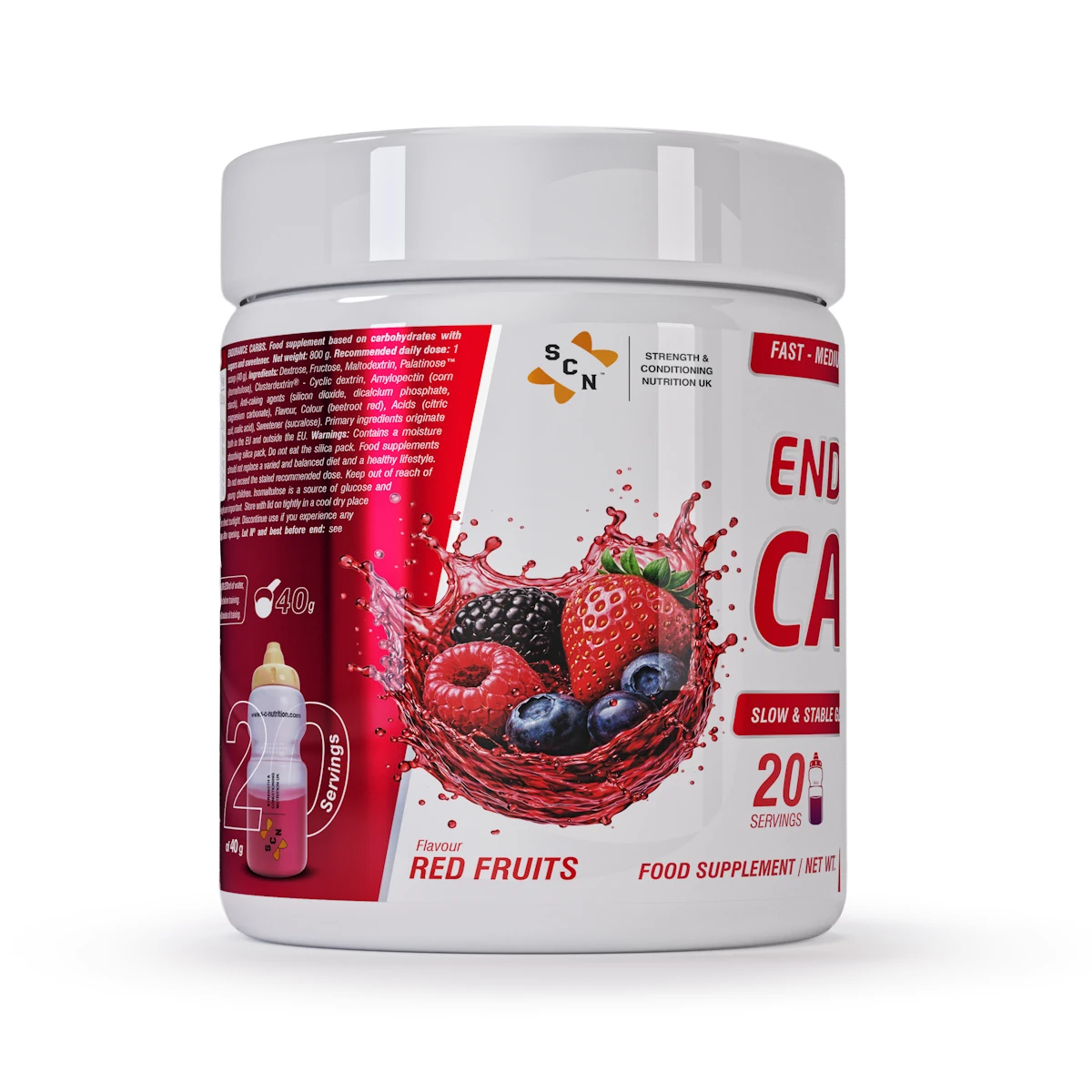
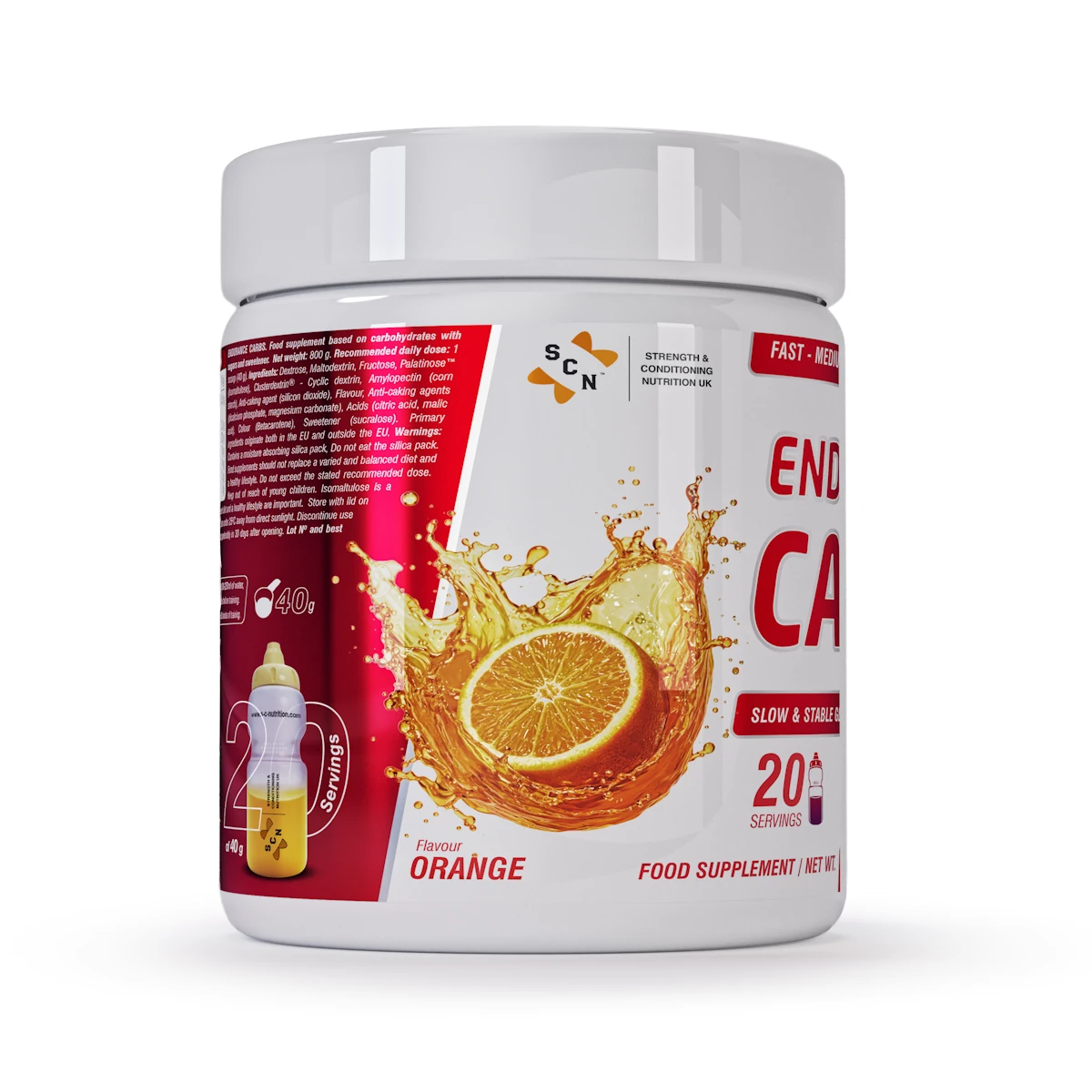
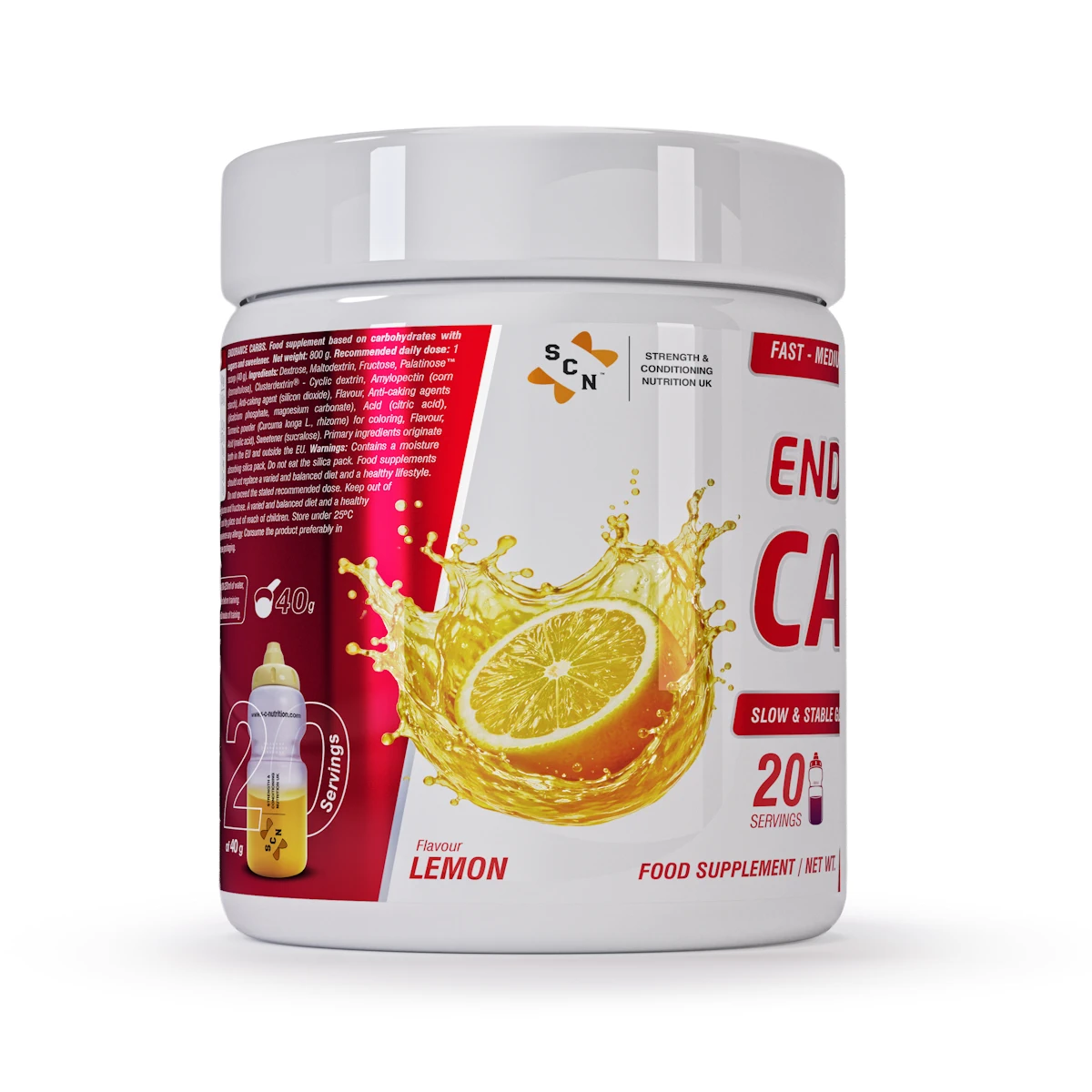
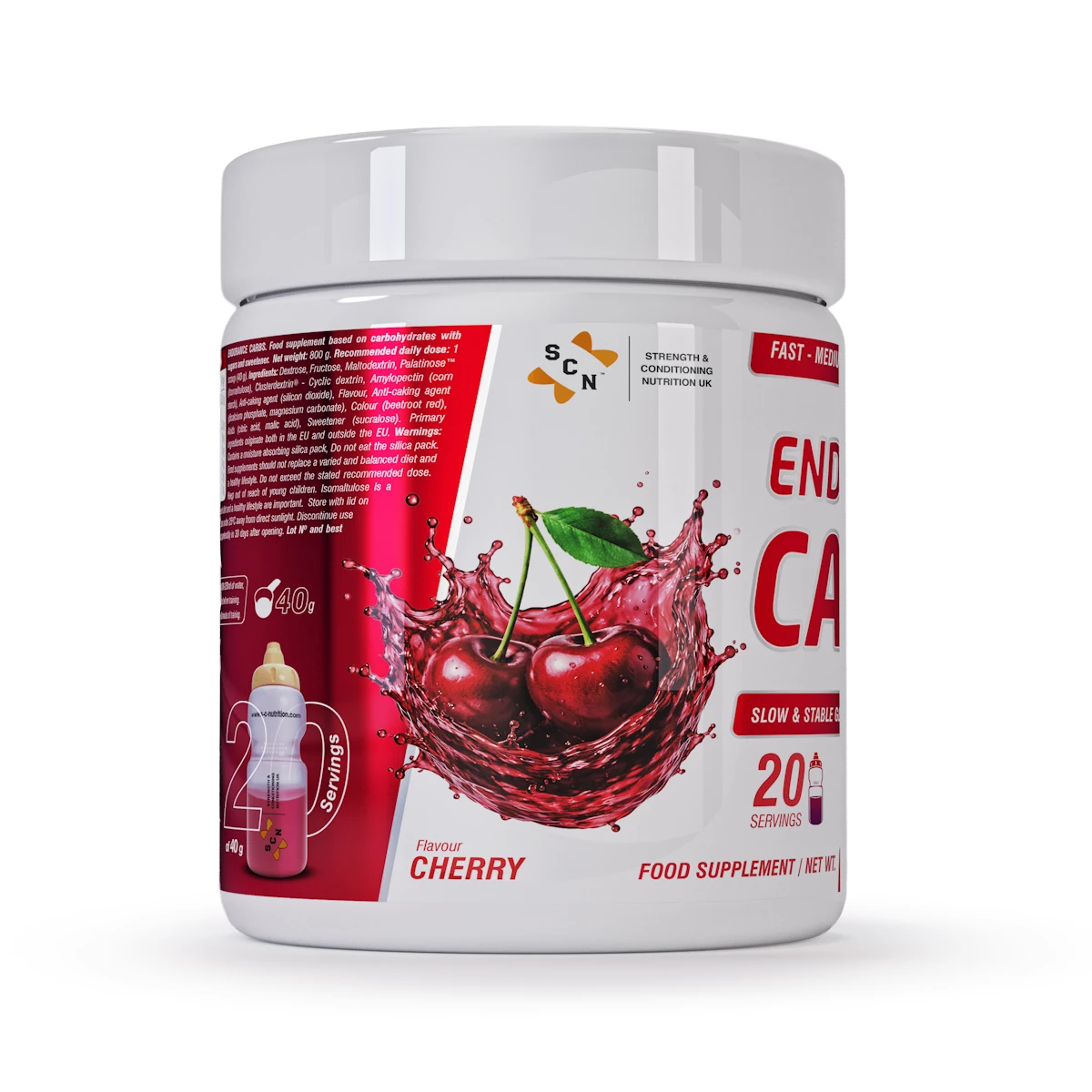
Lemon and Orange are the lightest for hot conditions; Cherry and Red Fruits are fuller-flavoured and popular for long winter rides. All four are naturally coloured with turmeric.
Product information
Καθαρό βάρος: 800 g | 20 servings
Available flavours: Lemon, Orange, Cherry, Red Fruits
Προτεινόμενη χρήση: Mix 1 scoop (40 g) with 200–250 ml of water. Consume 30–40 minutes before training. Take 1 serving for every 60 minutes of training.
Συστατικά: Dextrose, Maltodextrin, Fructose, Palatinose™ (Isomaltulose), Cluster Dextrin (Cyclic Dextrin), Amylopectin (corn starch), Anti-caking agent (silicon dioxide), Flavour, Anti-caking agents (dicalcium phosphate, magnesium carbonate), Acid (citric acid), Turmeric powder (Curcuma longa L., rhizome) for colouring, Flavour, Acid (malic acid), Sweetener (sucralose).
Προειδοποιήσεις: Food supplements should not replace a varied and balanced diet and a healthy lifestyle. Do not exceed stated recommended dose. Keep out of reach of young children. Consult a physician if you are pregnant or lactating. Discontinue use if you experience any allergy. A varied and balanced diet and a healthy lifestyle are important.
100 % doping free · Cross-contamination safe · Naturally coloured · Made in the EU
Scientific references
- Jeukendrup AE. Carbohydrate and exercise performance: the role of multiple transportable carbohydrates. Curr Opin Clin Nutr Metab Care. 2010;13(4):452-457.
- Jeukendrup AE, Moseley L, Mainwaring GI, et al. Exogenous carbohydrate oxidation during ultraendurance exercise. J Appl Physiol. 2006;100(4):1134-1141.
- Jentjens RLPG, Underwood K, Achten J, et al. Exogenous carbohydrate oxidation rates are elevated after combined ingestion of glucose and fructose during exercise in the heat. J Appl Physiol. 2006;100(3):807-816.
- Currell K, Jeukendrup AE. Superior endurance performance with ingestion of multiple transportable carbohydrates. Med Sci Sports Exerc. 2008;40(2):275-281.
- Jeukendrup AE, Jentjens R. Oxidation of carbohydrate feedings during prolonged exercise. Sports Med. 2000;29(6):407-424.
- Jeukendrup A. A step towards personalized sports nutrition: carbohydrate intake during exercise. Sports Med. 2014;44(Suppl 1):S25-S33.
- König D, Zdzieblik D, Holz A, Theis S, Gollhofer A. Substrate utilization and cycling performance following Palatinose™ ingestion: a randomized, double-blind, controlled trial. Nutrients. 2016;8(7):390.
- Notbohm HL, Umlauff L, Bloch W, Schumann M. Metabolic, hormonal and performance effects of isomaltulose ingestion before prolonged aerobic exercise: a double-blind, randomised, cross-over trial. J Int Soc Sports Nutr. 2021;18(1):38.
- Hamilton RA, Xia R, Nicholas C, Churm R, McCarthy OM, Bracken RM. Glycaemic impact of low- and high-glycaemic index carbohydrate diets in ultra-endurance athletes: insights from continuous glucose monitoring. 2025.
- Takii H, Kometani T, Nishimura T, Kuriki T, Fushiki T. A sports drink based on highly branched cyclic dextrin generates few gastrointestinal disorders in untrained men during bicycle exercise. Food Sci Technol Res. 2004;10(4):428-431.
- Takii H, Takii Y, Kometani T, et al. Fluids containing a highly branched cyclic dextrin influence the gastric emptying rate. Int J Sports Med. 2005;26(4):314-319.
- Furuyashiki T, Tanimoto H, Yokoyama Y, Kitaura Y, Kuriki T, Shimomura Y. Effects of ingesting highly branched cyclic dextrin during endurance exercise on rating of perceived exertion and blood components associated with energy metabolism. Biosci Biotechnol Biochem. 2014;78(12):2117-2119.
- Shiraki T, Kometani T, Yoshitani K, Takata H, Nomura T. Evaluation of exercise performance with the intake of highly branched cyclic dextrin in athletes. Food Sci Technol Res. 2015;21(3):499-502.
- EFSA Panel on Dietetic Products, Nutrition and Allergies. Scientific opinions on health claims related to carbohydrate solutions and endurance performance (2011), carbohydrates and recovery of normal muscle function (2018), and isomaltulose and reduced post-prandial glycaemic responses (2011).
This website is for your education and general health information only. The ideas, opinions and suggestions contained on this website are not to be used as a substitute for medical advice, diagnosis or treatment from your doctor for any health condition or problem. Users of this website should not rely on information provided on this website for their own health problems. Any questions regarding your own health should be addressed to your own physician. Please do not start or stop any medications without consulting with your doctor.